Far out in a great blue lake in north-eastern Tibet there is a small island of rock and grass. About two hundred years ago a yogi lived there for three years, with the wind, the water and the birds for company, and he sang.
His name was Shabkar Tsokdruk Rangdröl (1781–1851). A yogi is someone who gives his whole life to meditation. Shabkar gave his to meditation, to song, and to every living being he met, and he left one of the best-loved life stories in Tibetan literature.
This is also a story about names: the names he was given along the way, and the one name he called on all his life.
A boy among the yogis of Rebkong
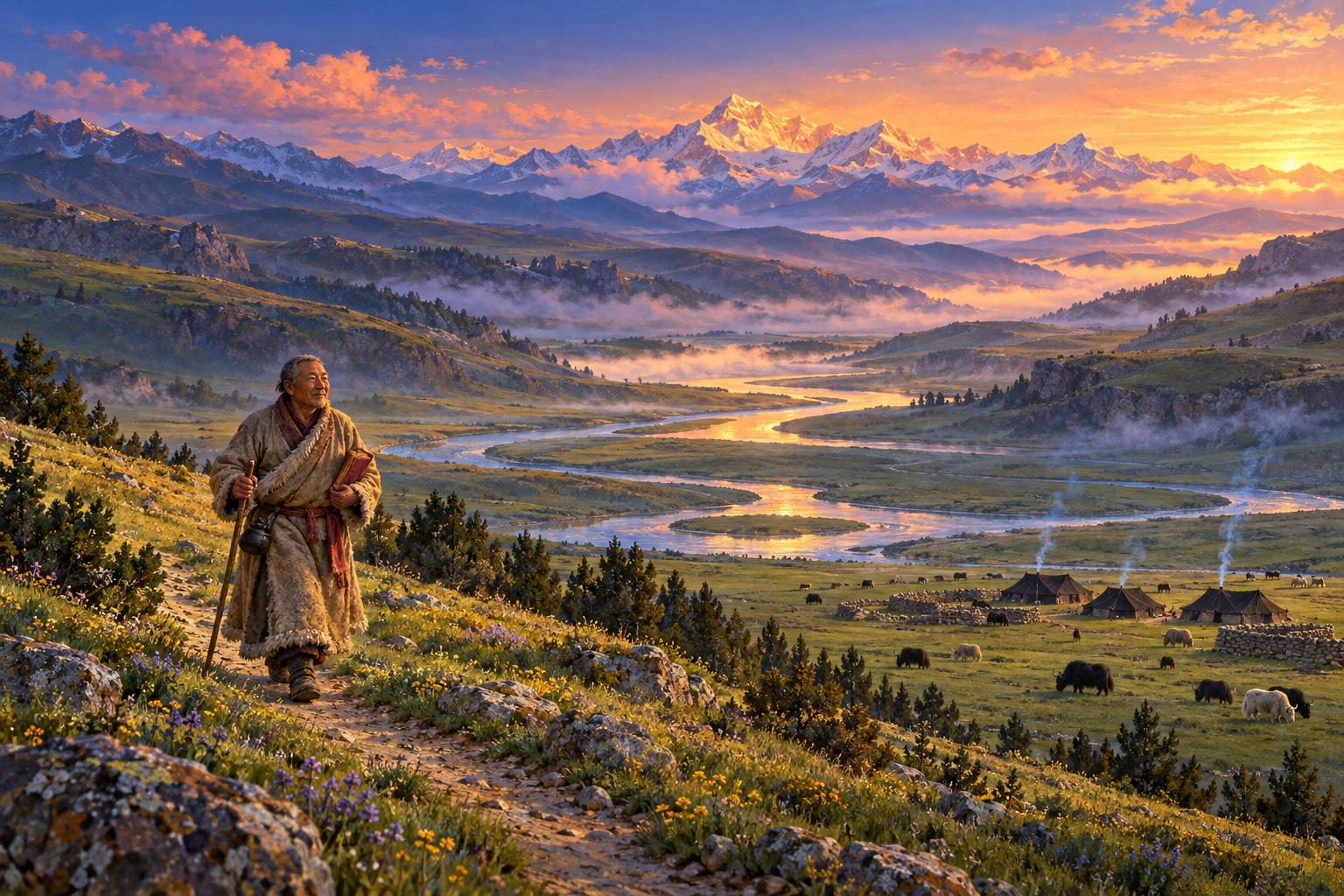
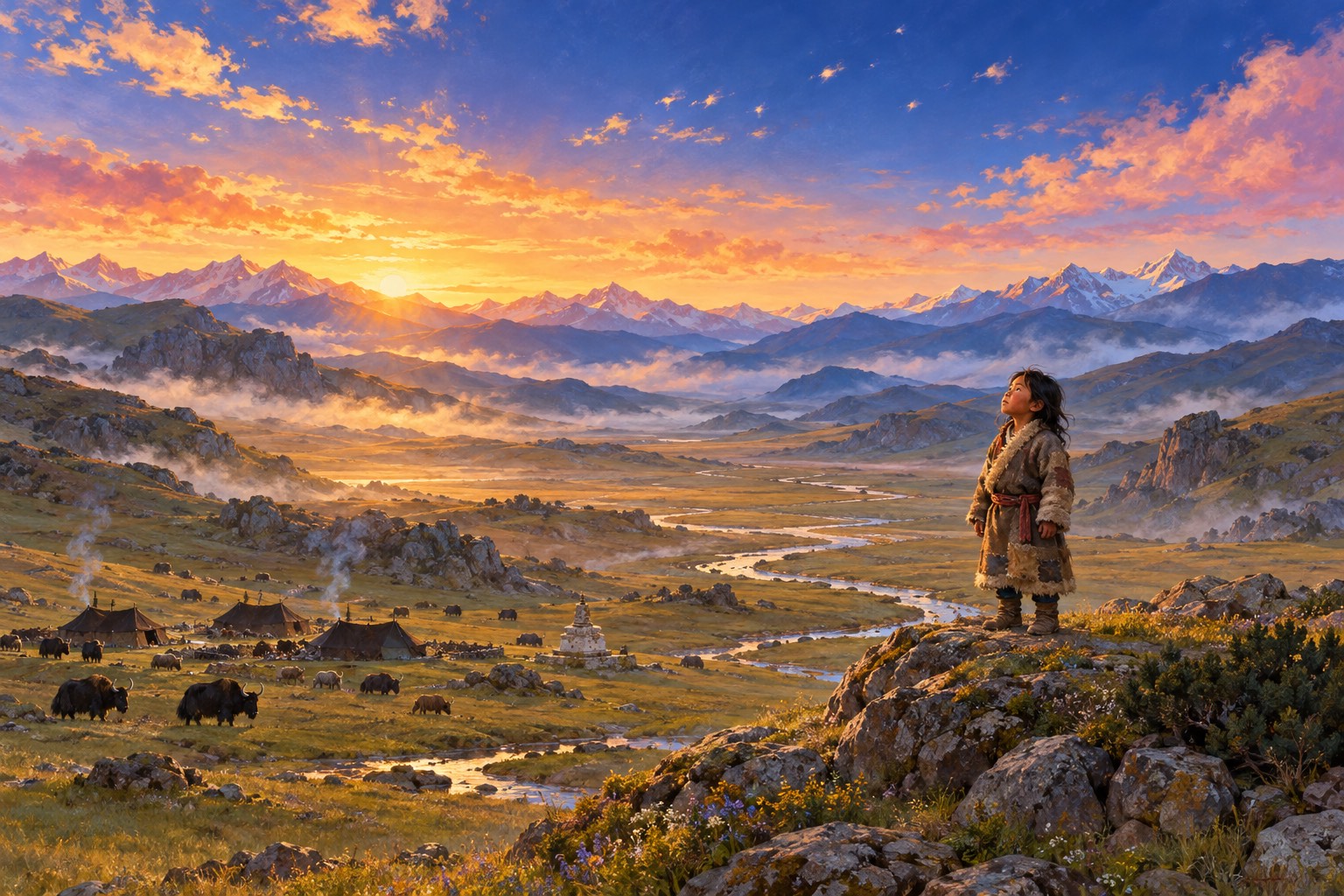
He was born in 1781 in Rebkong, a valley in Amdo, the north-eastern region of Tibet. Rebkong was known for its ngakpas, lay practitioners of tantra who keep their hair long and practise at home and in retreat rather than in monasteries. His childhood name was Ngawang Tashi.
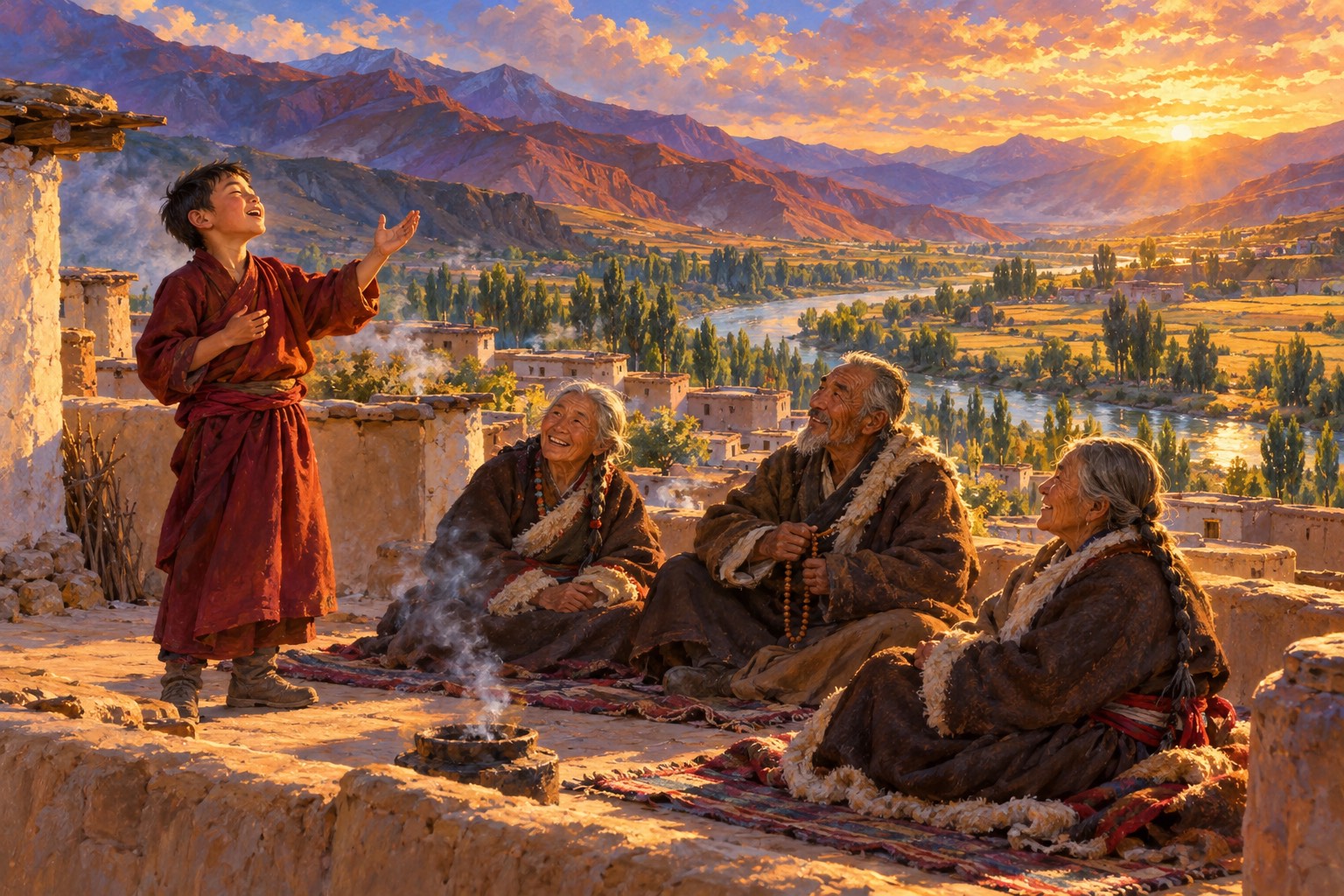
His autobiography says that even as a child he leaned toward a life of contemplation. He also loved stories and jokes, and he loved to sing. One summary of his life says he sang religious songs to the old people of his village to encourage them to recite mantras.
At eleven he joined Zhohong, a community of tantric practitioners, and at twelve he received his first teachings of the Nyingma, the "Ancient" school of Tibetan Buddhism, which traces its teachings to Guru Rinpoche. Later teachers gave him terma ("treasure") teachings, which Guru Rinpoche is said to have hidden for later times, among them those of Jigme Lingpa.
The young monk
He loved his mother deeply, and she asked him again and again to marry. He would not. Instead, in 1801, at about twenty, he went to Dobi, a monastery of the Gelug school, and took a monk's vows. He was given a new name: Jampa Chödar.
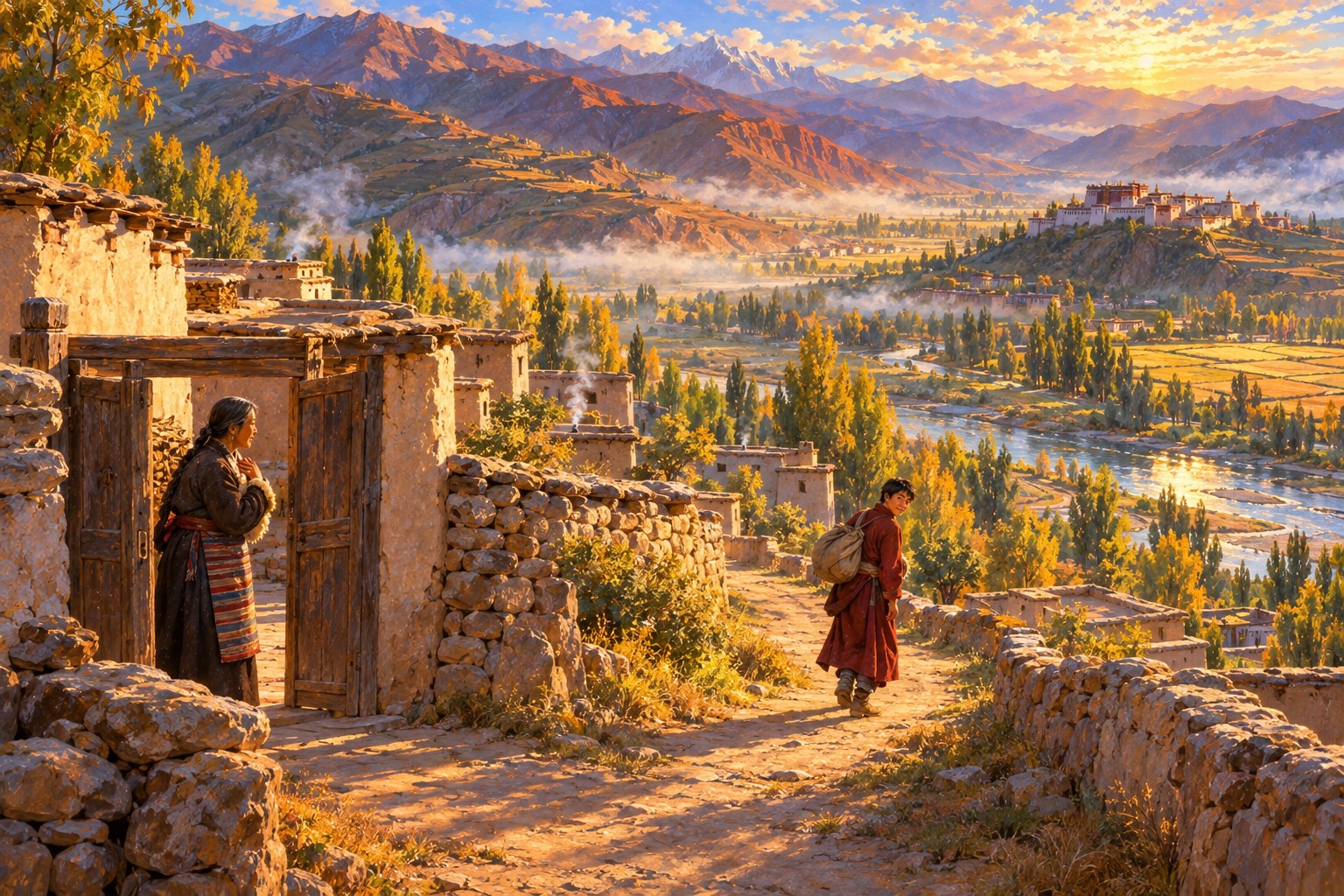
The aged abbot who ordained him gave him advice that shaped the rest of his life: go and find Chögyal Ngakyi Wangpo.
The Dharma King
Chögyal means "Dharma King," and the title was meant literally. Ngakyi Wangpo was a Mongol prince of the Kokonor region, descended from the great Mongol ruler Gushri Khan, and also a Nyingma master who had studied with a close disciple of Jigme Lingpa.
The young monk stayed with him until the king-lama's death in 1807. He received everything from "mind training," the patient practice of turning the mind toward kindness, to the teachings of Dzogchen, the "Great Perfection," the heart of Nyingma practice.
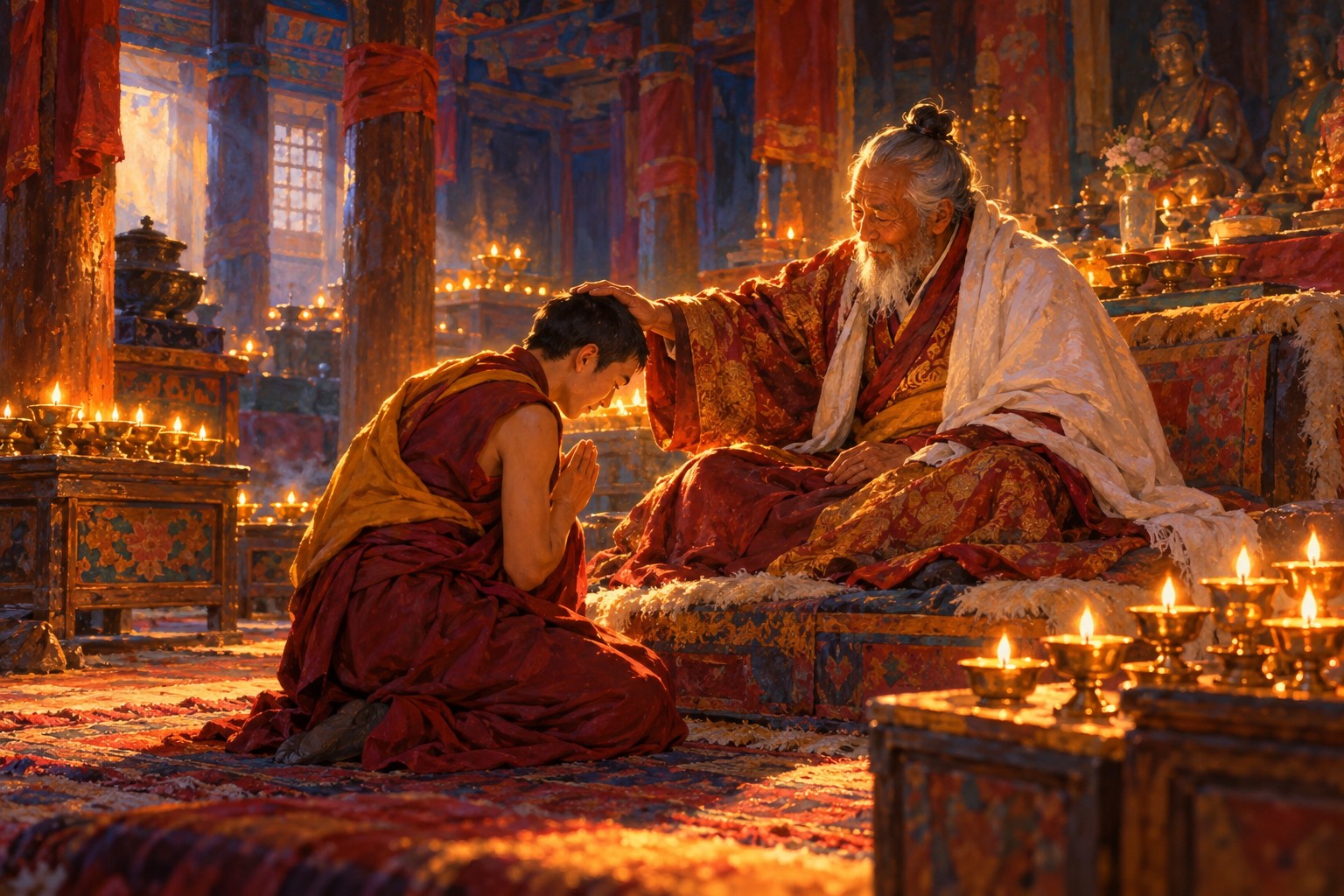
During an empowerment, a ceremony in which a teacher authorizes a student to practise, Ngakyi Wangpo gave him the name Tsokdruk Rangdröl. Roughly, it means "the six senses, naturally free."
Matthieu Ricard, who translated Shabkar's autobiography into English, notes in his short biography of Shabkar that Ngakyi Wangpo was said to be an incarnation of Marpa, and Shabkar a rebirth of Marpa's great disciple, the singing yogi Milarepa.
The heart of the lake
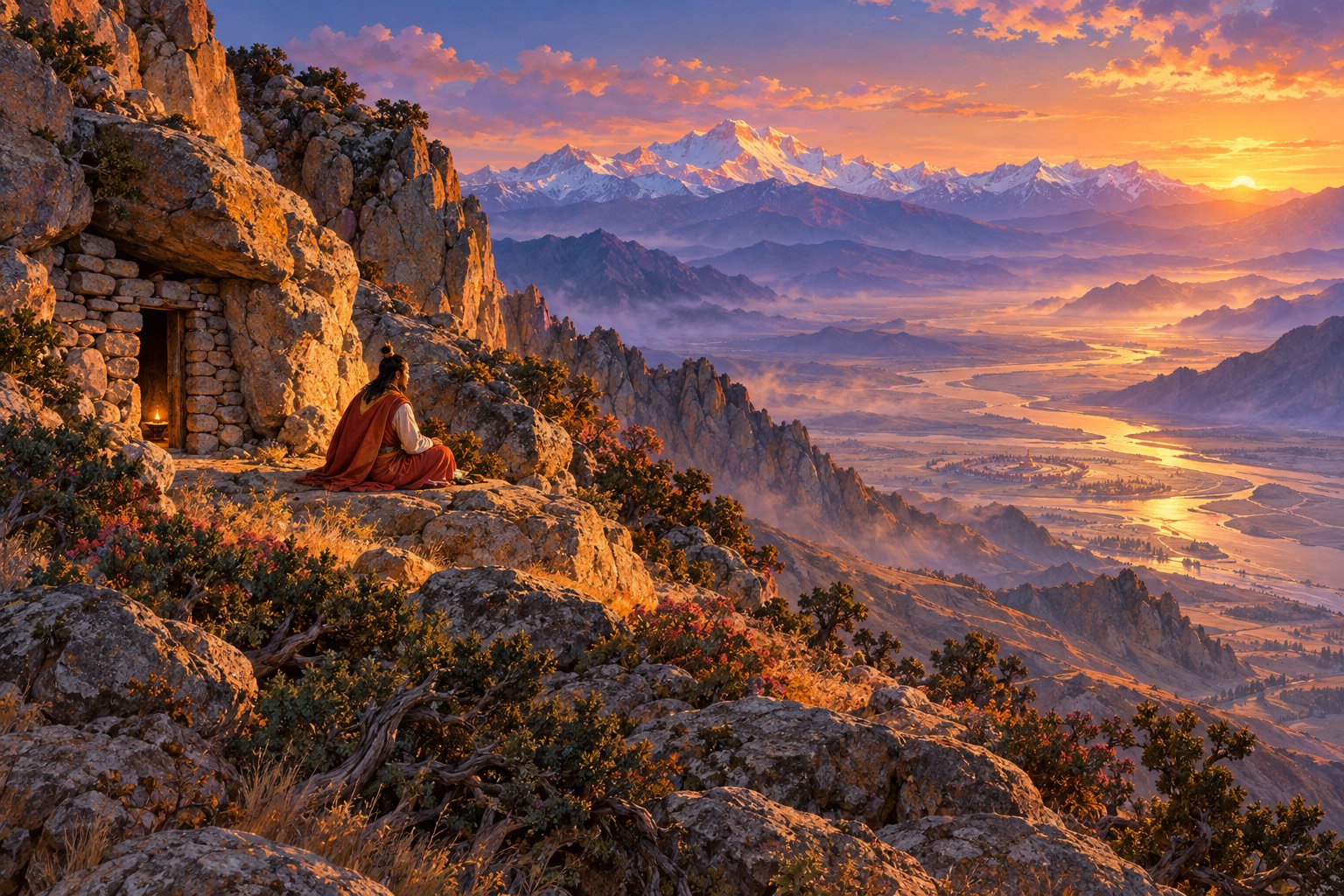
He spent five years in the wilderness of Tsezhung, and three years, from 1806 to 1809, on Tsonying, the "Heart of the Lake," a small island in Kokonor, the Blue Lake of Amdo. The short biographies differ on how these retreats fit around his teacher's death, so the order is left open here.
In those days no boats crossed to the island in summer. Only when the lake froze in winter could pilgrims and monks walk out across the ice. For much of the year, the yogi was alone with the sky and the water.
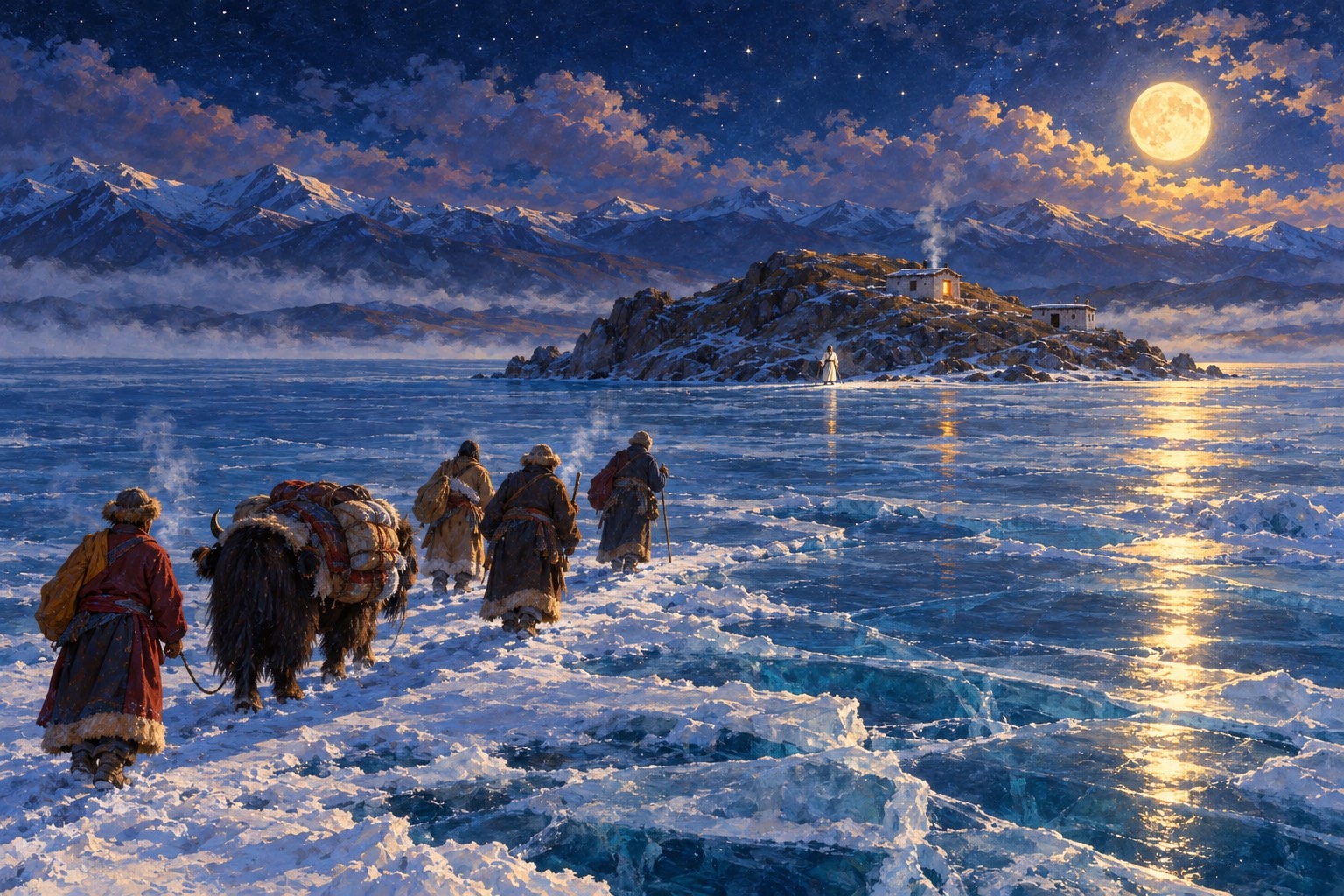
On the island, in 1806, he began writing the story of his life. He finished it in 1837. Much of it is in verse: gur, spontaneous songs of experience in the tradition of Milarepa, sung to his students, to patrons, to himself, and to the lake.
The White Footprint
In 1814 he reached Mount Kailash, the great snow mountain of western Tibet. He settled in a cave below the Cave of Miracles where Milarepa had stayed, near a mark in the rock called the White Footprint, one of four footprints the Buddha is said to have left at Kailash.
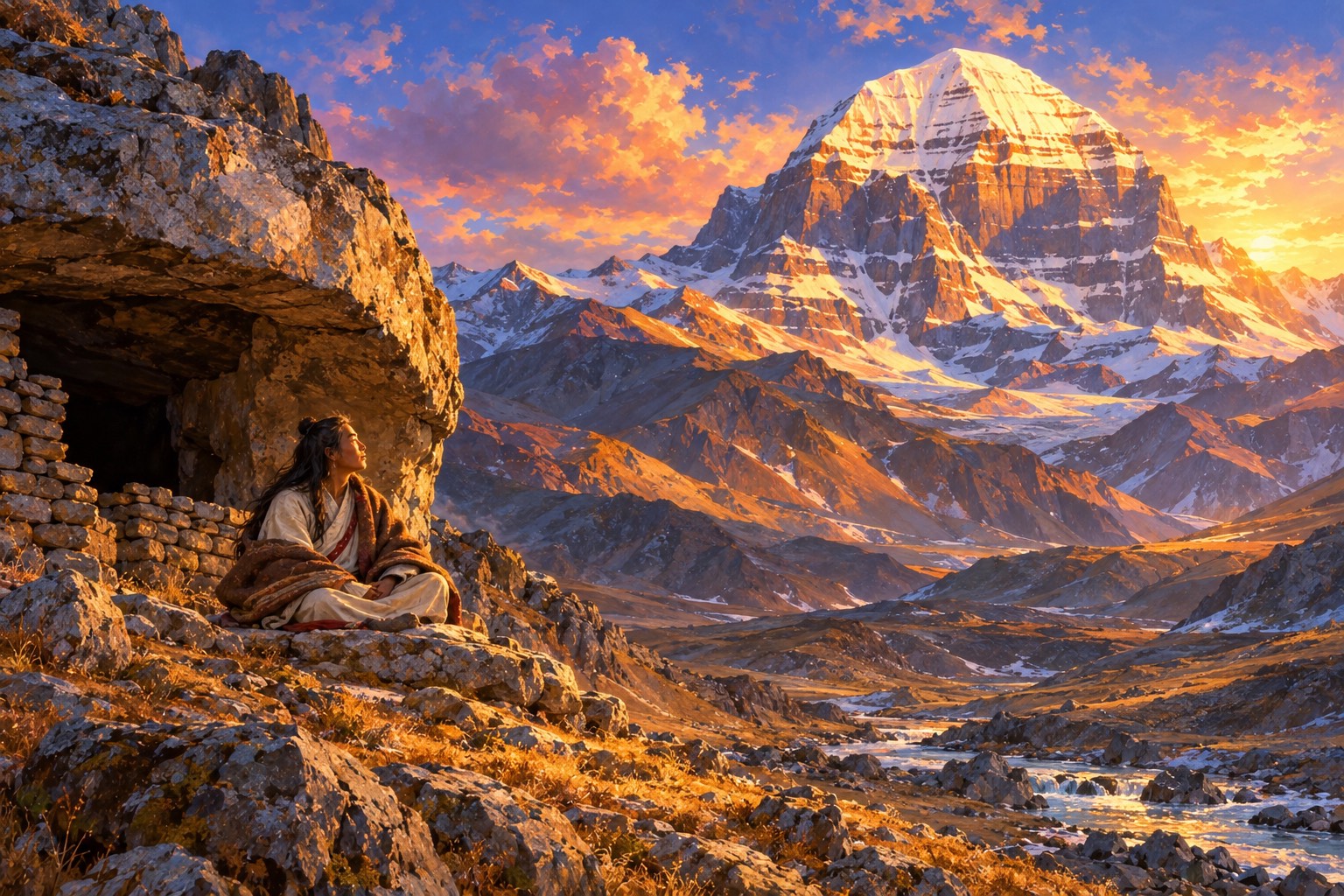
So he became known as Shabkar, "White Footprint." Ricard's biography adds that people also explained the name another way: wherever he set foot, the land turned "white with virtue," meaning that people's minds turned toward the Dharma.
Near Kailash, around 1815, he composed The Emanated Scripture of Manjushri, a book of advice set out as his students' questions and his answers.
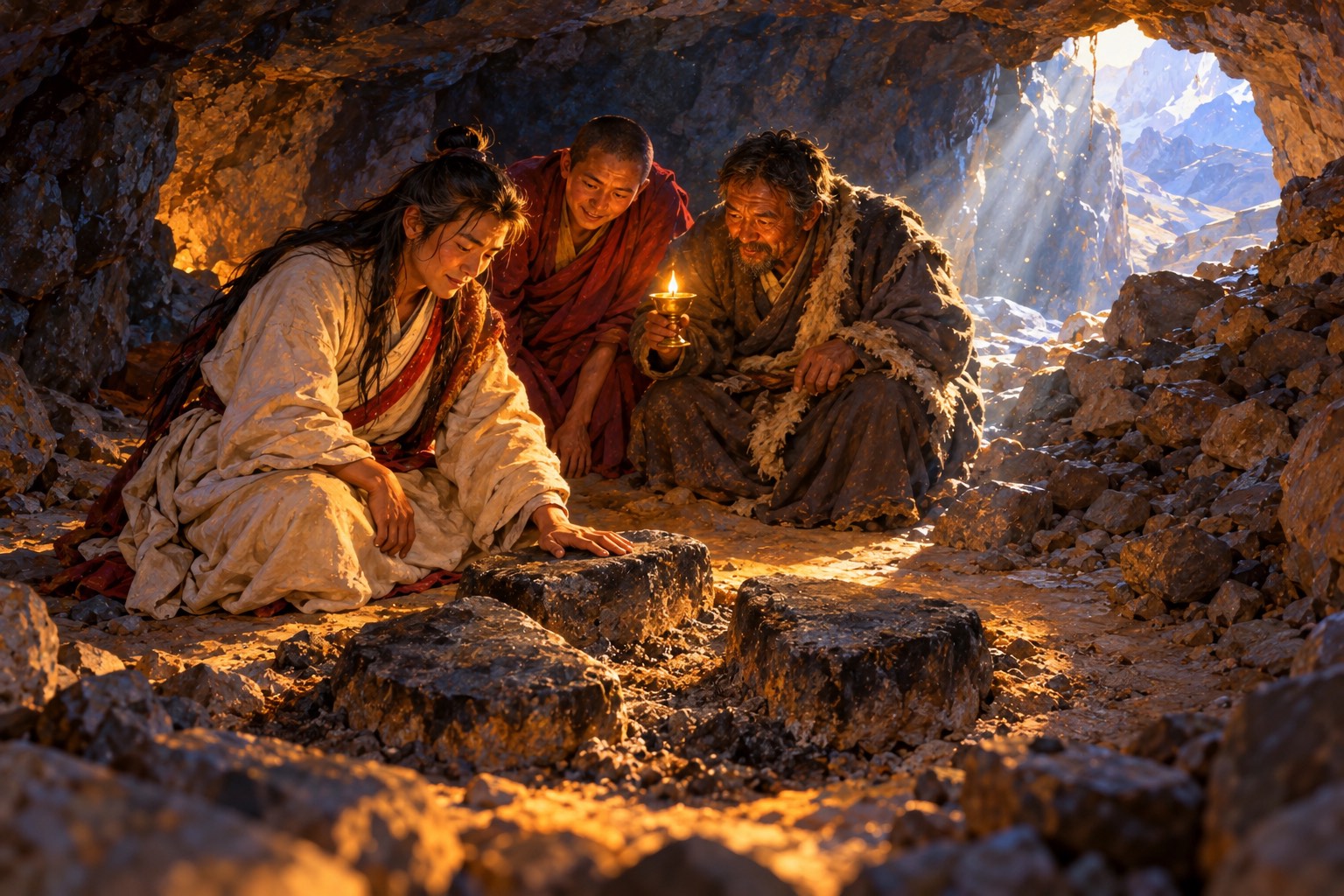
He went on to Lapchi, another of Milarepa's mountain retreats. The scholar Rachel Pang, drawing on the Tibetan text of the autobiography, tells how he found the true, hidden entrance to Milarepa's Cave of Subduing Mara and cleared away the rubble. Inside lay the old hearthstones from Milarepa's own fire, and the pilgrims' faith, the autobiography says, grew all the stronger.
Gold for the Great Stupa
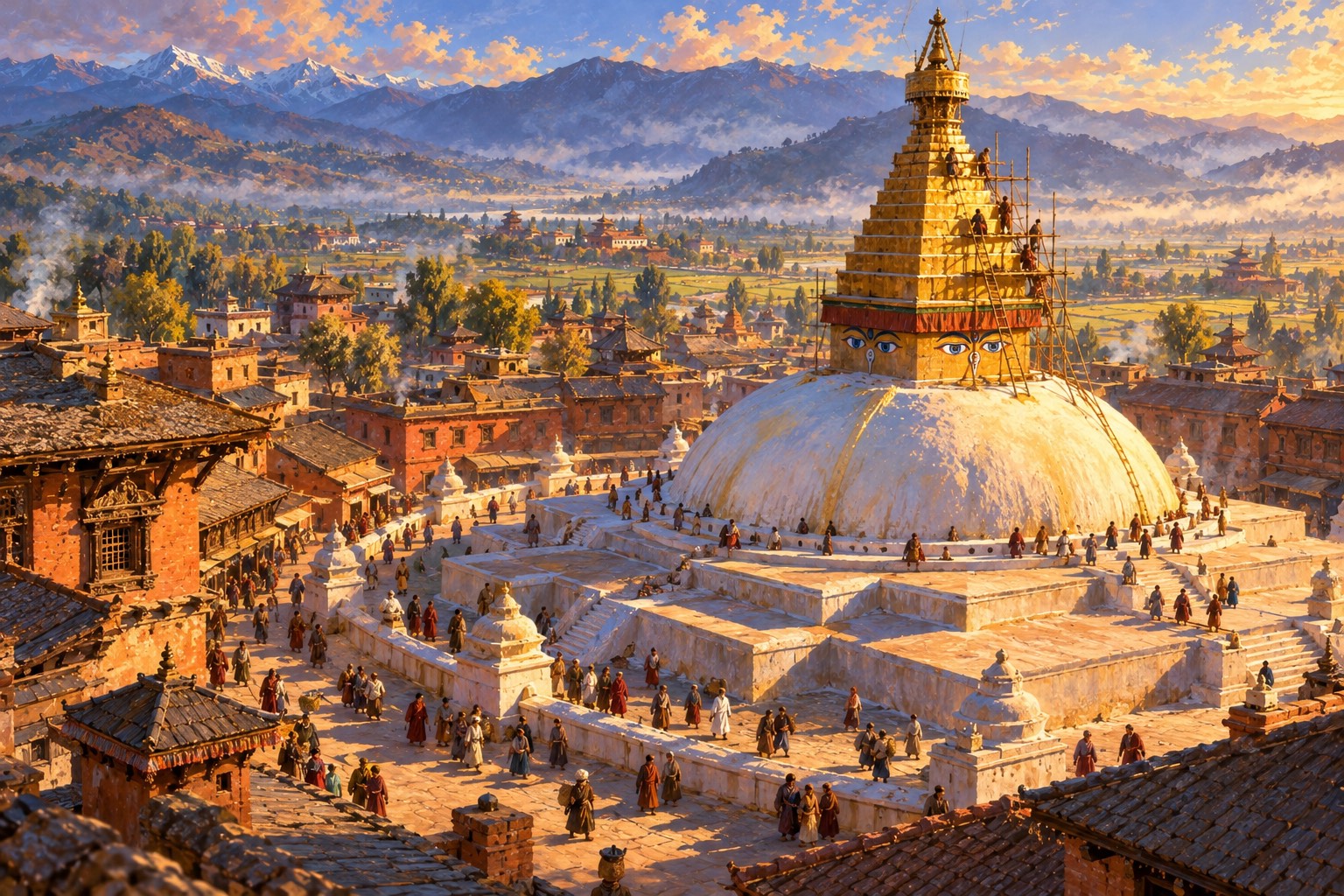
In 1818 he walked down into the Kathmandu Valley in Nepal. Ricard's biography says he covered the whole spire of the great stupa of Boudhanath with gold his devotees had offered him. A stupa is a domed monument holding sacred relics.
Wikipedia, drawing on a history of the stupa, describes his offerings differently: whitewash and saffron for the great stupas, and two buffaloes ransomed at feasts rather than killed and eaten.
The sheep's petition
Shabkar is remembered above all for his compassion for animals. He rescued insects from a pond, sang with bees and ducks, and scolded himself for once throwing a stone at an owl.
On the high plateau, where little grows and nearly everyone ate meat, he gave meat up. In Food of Bodhisattvas, translated by the Padmakara Translation Group, his writings on abstaining from meat are collected: scripture and the words of earlier masters, with his own pleading commentary.
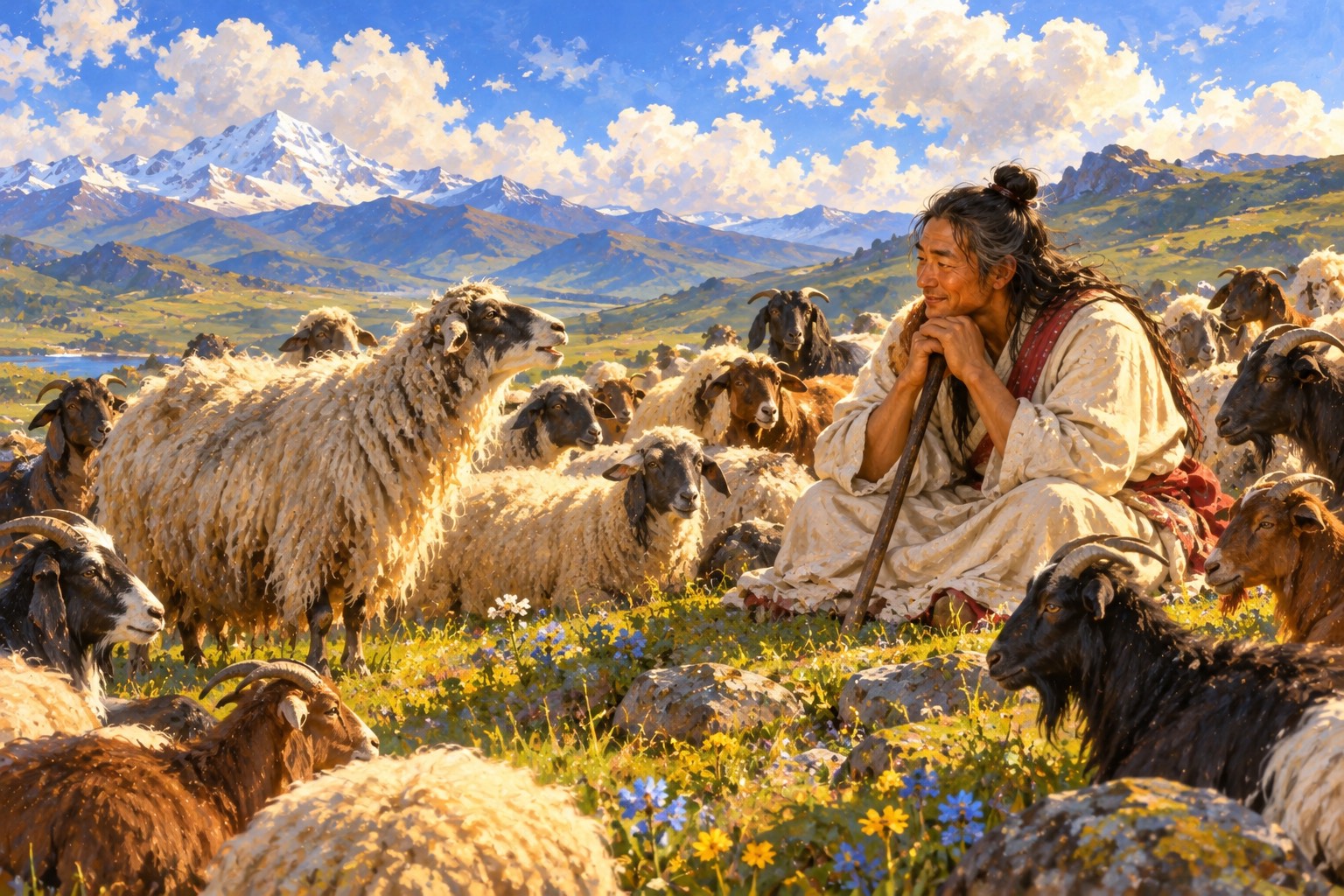
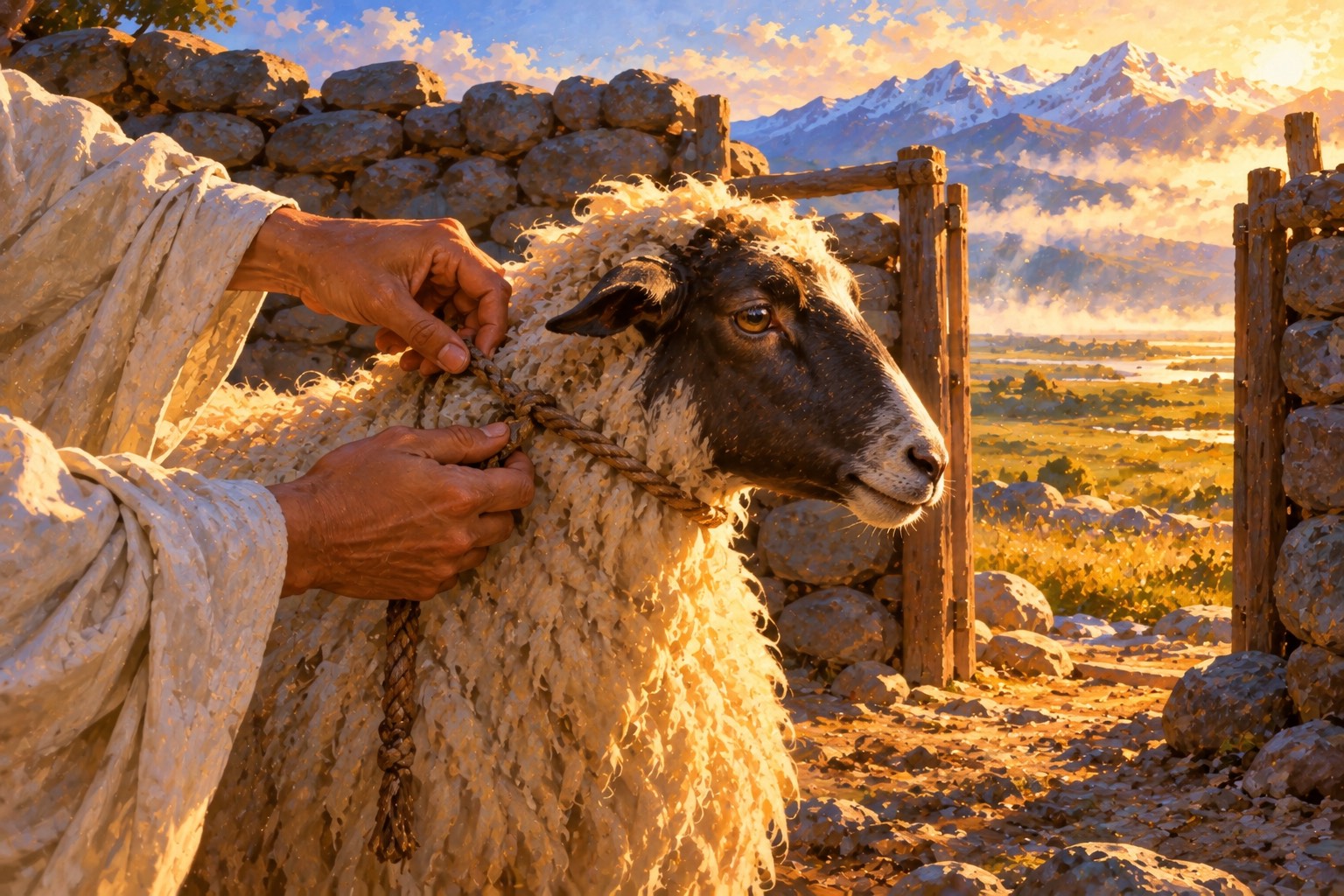
One of his songs, excerpted in Tricycle from Ricard's translation, is both funny and fierce. In a meadow, goats and sheep crowd around him, and an old ewe speaks up. When lamas visit a village, she says, the sheep are killed to feed them. Please, she begs, ask your patrons to spare us.
Shabkar teases her with the usual excuse: surely it is noble to give your body to feed a lama. The whole flock cries out that he is one of those lamas, and bolts. As they run, he promises he will carry their message to the lamas anyway, and so he did, for the rest of his life.
Every school, one source
In 1828, at forty-seven, Shabkar went home to Amdo, and he taught there until his death in 1851.
He was a Gelug monk whose root teacher was a Nyingma master. At Milarepa's caves he received Kagyu teachings, and from the throne holders of Sakya he received empowerments. Pang shows that, decades before the better-known Rimé or "non-sectarian" movement in eastern Tibet, he was urging people not to set one school against another.
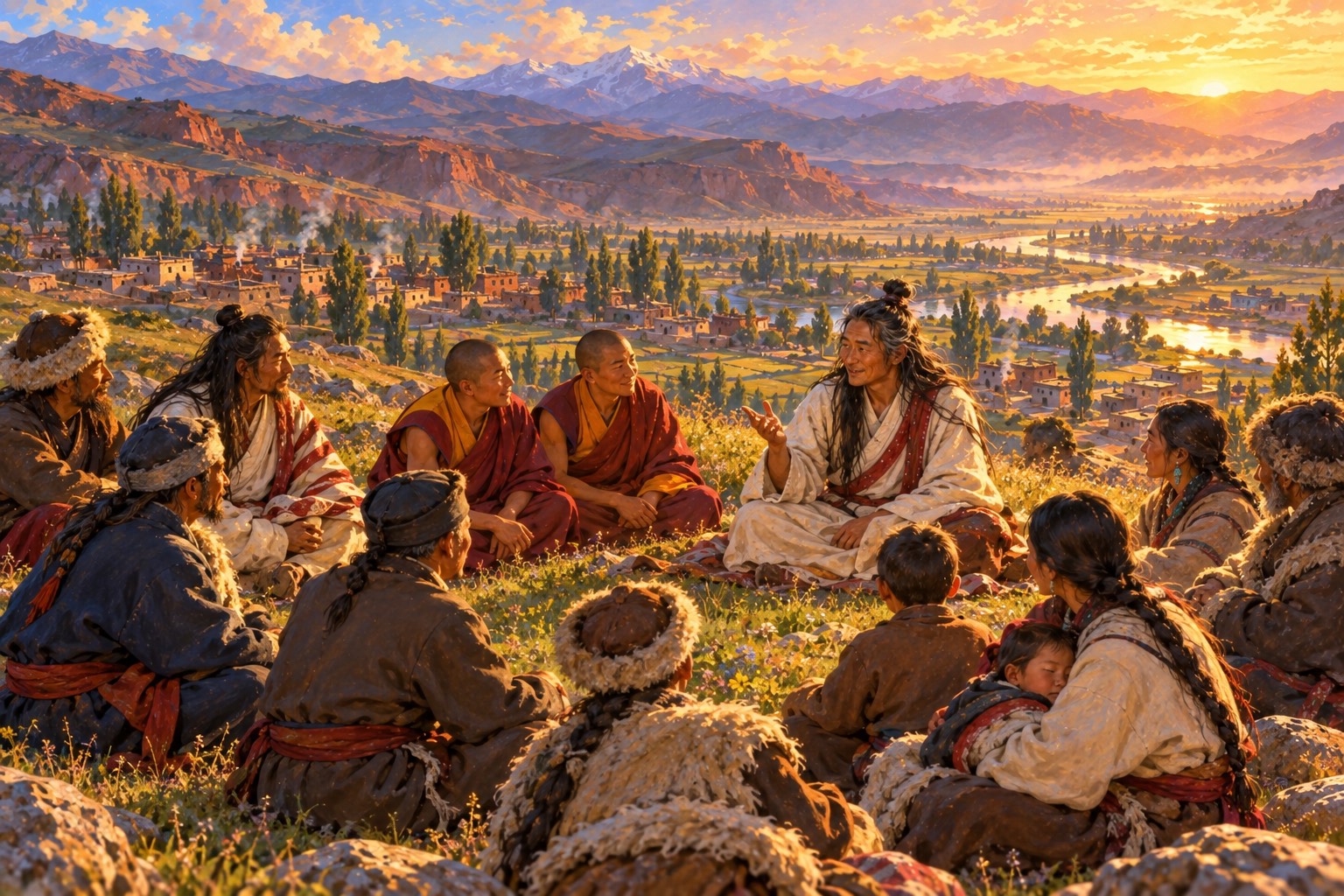
Speaking to a mixed crowd of Buddhists, Bönpos, ngakpas, Chinese, Tibetans and Mongols, he told them, in Pang's paraphrase of the passage, to see all their traditions as emanations of the buddhas and bodhisattvas. His "Song of Nonsectarianism," which Pang has translated for Lotsawa House, says the same in verse: many paths, one goal.
The face he had prayed to
Guru Rinpoche ran through Shabkar's life like a thread. In a song about his own past lives, Pang notes, he counts among them Drenpa Namkha, one of Guru Rinpoche's disciples in eighth-century Tibet.
The second volume of his autobiography, which has not yet been translated into English in full, tells of a morning late in his life. He had decided to write The Emanated Scripture of Orgyen. Orgyen is the Tibetan name for Oddiyana, Guru Rinpoche's homeland, named in the first line of the Seven-Line Prayer.
He prayed to the masters of his lineage. At dawn, the autobiography says, Guru Rinpoche appeared to him in a vision, surrounded by countless buddhas and bodhisattvas.
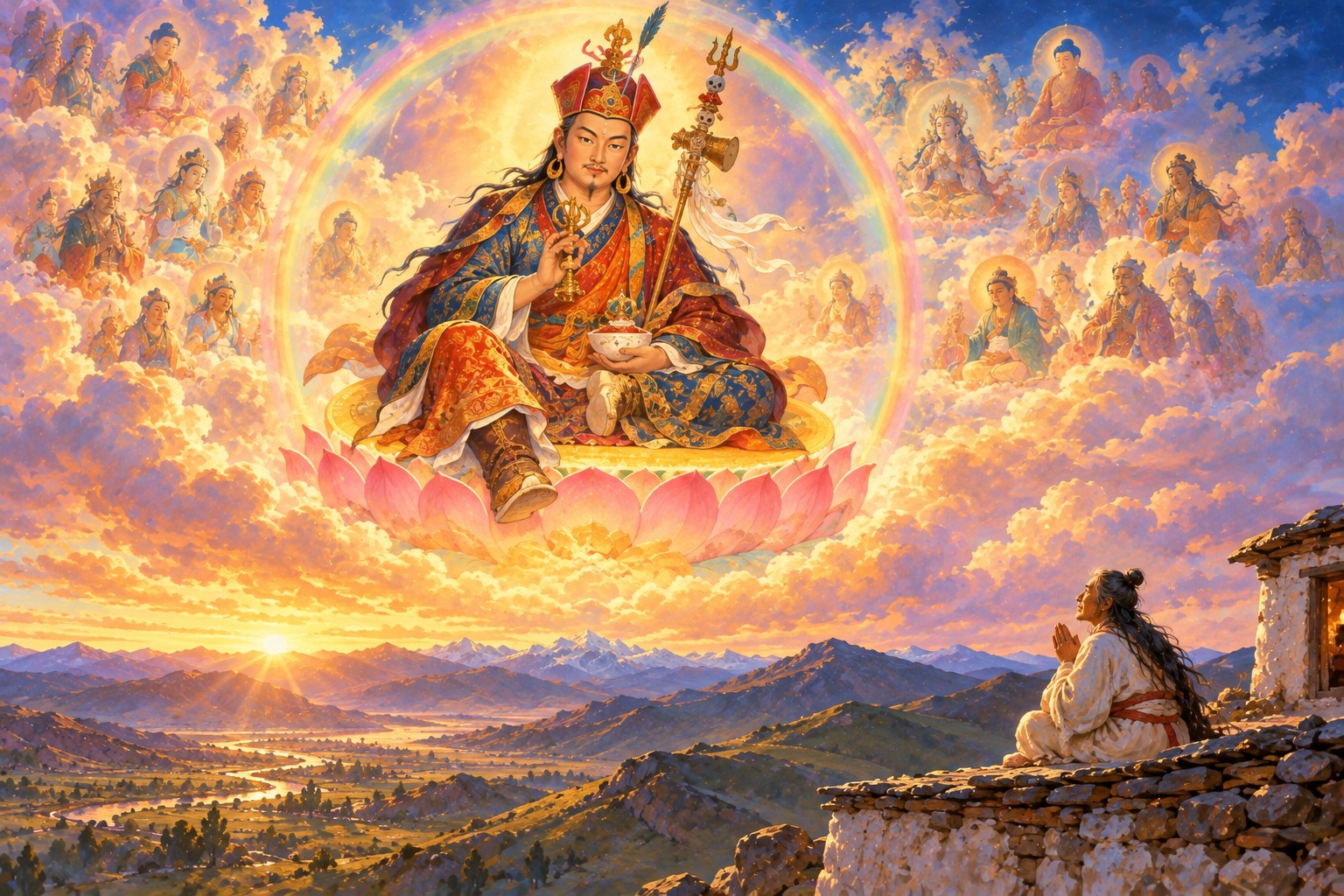
In the Tibetan passage Pang cites, Shabkar makes offerings, joins his palms, and says with some feeling that he has prayed to Guru Rinpoche since he was a child and has never once seen his face. Guru Rinpoche smiles.
Then, in Pang's account, Guru Rinpoche tells him he has come before, in other forms: as Tsongkhapa, the founder of the Gelug school, on the island in the lake, and as Atisha, the great Indian teacher, in a hermitage by the Machu river. Now he shows his own face. Pang reads this as Shabkar's strongest statement that every school leads back to one source.
For a story about names, this is its heart. The one we call by the name the Seven-Line Prayer gives him, Padmasambhava, the Lotus-Born, may come to us under many names.
A song that kept travelling
He had many students, whose names fill his autobiography, and his life story has been loved ever since. Dilgo Khyentse Rinpoche said that as one reads it, "one's mind cannot resist being turned toward the Dharma" (quoted in Ricard's biography).
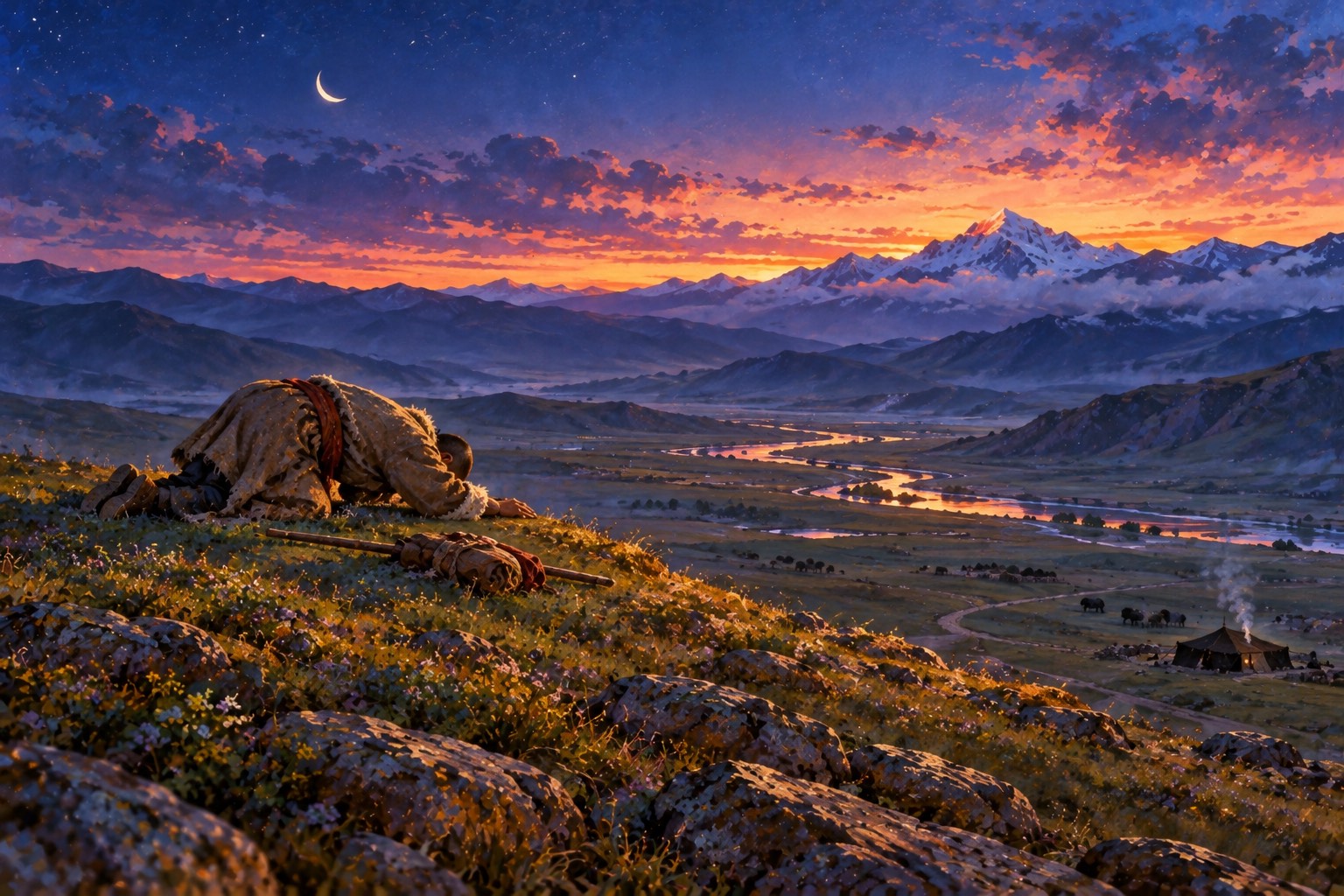
There is one more story, from oral tradition. Patrul Rinpoche, the wandering teacher of eastern Tibet, was so moved by what he heard of Shabkar that he set out north to meet him. On the way, word came that Shabkar had died. Patrul, it is said, turned toward Amdo and prostrated a hundred times.
About the art
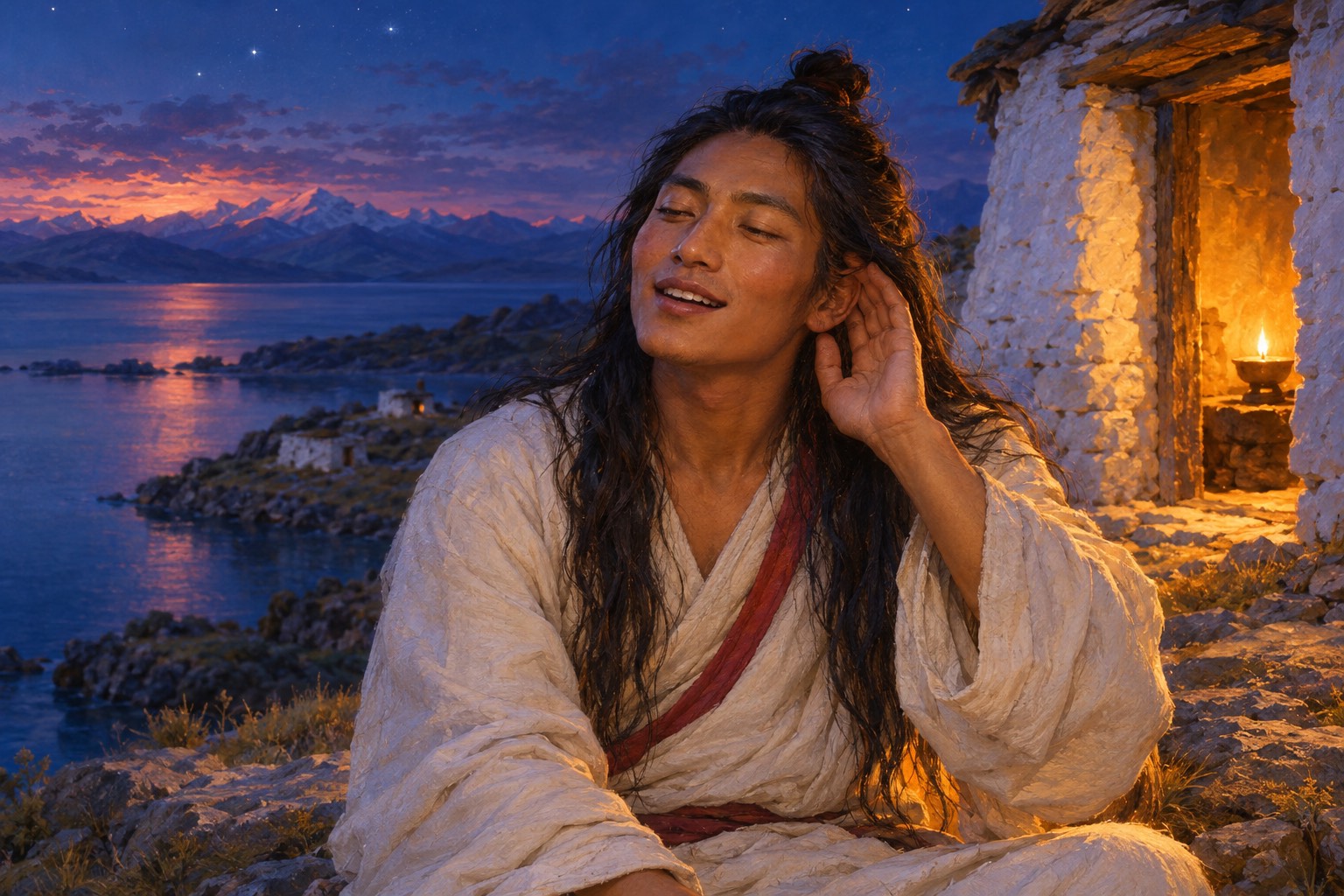
Shabkar is painted as he appears in a nineteenth-century painting on Himalayan Art Resources: a youthful, beardless yogi with long black hair and a small topknot, in loose white cotton robes with a red meditation band across his chest. His right hand cupped behind his ear is the singing yogi's gesture, the same one Milarepa makes in paintings. Ricard notes that he kept a monk's vows yet let his hair grow and wore a yogi's topknot. Other portraits show him in monastic orange and red, so the white robes are one traditional choice among several.
As a boy, a young man and a newly ordained monk he is shown without the yogi's long hair, in plain red wool and then in maroon monastic robes with a yellow shawl, since the sources say he grew his hair only later. His teacher, the Mongol prince and lama Ngakyi Wangpo, wears brocade with a white shawl; no portrait of him was consulted, so his look is a respectful invention.
Guru Rinpoche appears once, in the dawn vision Shabkar's autobiography describes. He is in his main form: the lotus hat with a half-vajra and a vulture feather, a five-pronged vajra at his heart, a skull cup holding a long-life vase in his lap, the khatvanga staff resting against his left shoulder, seated on a lotus inside a rainbow sphere. The faint figures around him stand for the countless buddhas and bodhisattvas of the account.
Tsonying is drawn as a bare rocky island in a vast turquoise lake, reachable only over winter ice. At Kailash the White Footprint is shown only as a pale patch of rock, not as a literal footprint. At Boudhanath the spire is golden, following Ricard's account. Patrul Rinpoche, in the last picture, wears the sheepskin coat in which he appears in his own story on this site.
Why this matters for practice
Shabkar called on Guru Rinpoche from childhood, and his autobiography says that when Guru Rinpoche finally showed his face, he revealed that he had already come under other names and forms. The fourth line of the Seven-Line Prayer gives that one name, Padmasambhava, the Lotus-Born. Shabkar's life suggests that the prayer is something you can sing anywhere, on a frozen lake or in a meadow full of sheep, and that kindness to every living being belongs to the same practice.

If something in this story moved you, you might pause tonight and recite the prayer once, the way Shabkar sang: simply, out loud if you like, to the sky and to anyone listening. When you reach the name Padmasambhava, you might remember the yogi who called on that name from childhood, and the smile that answered him.
Sources and further reading
- Zhabkar Tsokdruk Rangdrol, by Matthieu Ricard (Treasury of Lives biography, reproduced on HAR), Himalayan Art Resources, set 'Teacher: Shabkar Tsogdrug Rangdrol'
- Teacher (Lama) – Shabkar Tsogdrug Rangdrol, items 8012, 8013, 8014 and 15532, Himalayan Art Resources
- The Rimé Activities of Shabkar Tsokdruk Rangdrol (1781–1851), by Rachel H. Pang, Revue d'Etudes Tibétaines 29 (2014), Digital Himalaya
- Shabkar Tsokdruk Rangdrol, Rigpa Wiki (Internet Archive snapshot, March 2025)
- Shabkar Tsokdruk Rangdrol (author page) and three of his texts, Lotsawa House
- Treasury of Lives: Poet Saints, Part 1, by Asha Kaufman (2013), Tricycle
- Meat: To Eat It or Not, by Lama Shabkar (excerpt from The Life of Shabkar), Tricycle (Winter 1994)
- Shabkar Tsokdruk Rangdrol, Wikipedia
- Shabkar, Tibetan Buddhist Hermit, Hermitary
- Qinghai Lake, Wikipedia
- The Emanated Scripture of Manjushri, tr. Sean Price (Snow Lion, 2019), Penguin Random House (publisher's page)
- Food of Bodhisattvas: Buddhist Teachings on Abstaining from Meat, by Shabkar, tr. Padmakara Translation Group (Shambhala, 2004), Google Books (description only)
- The Life of Shabkar: The Autobiography of a Tibetan Yogin, tr. Matthieu Ricard et al. (SUNY, 1994; Snow Lion, 2001), Book
This retelling is waiting to be read by a knowledgeable practitioner. Where the traditional accounts differ, the story says so; if you notice a mistake, please tell us through Share Your Story.