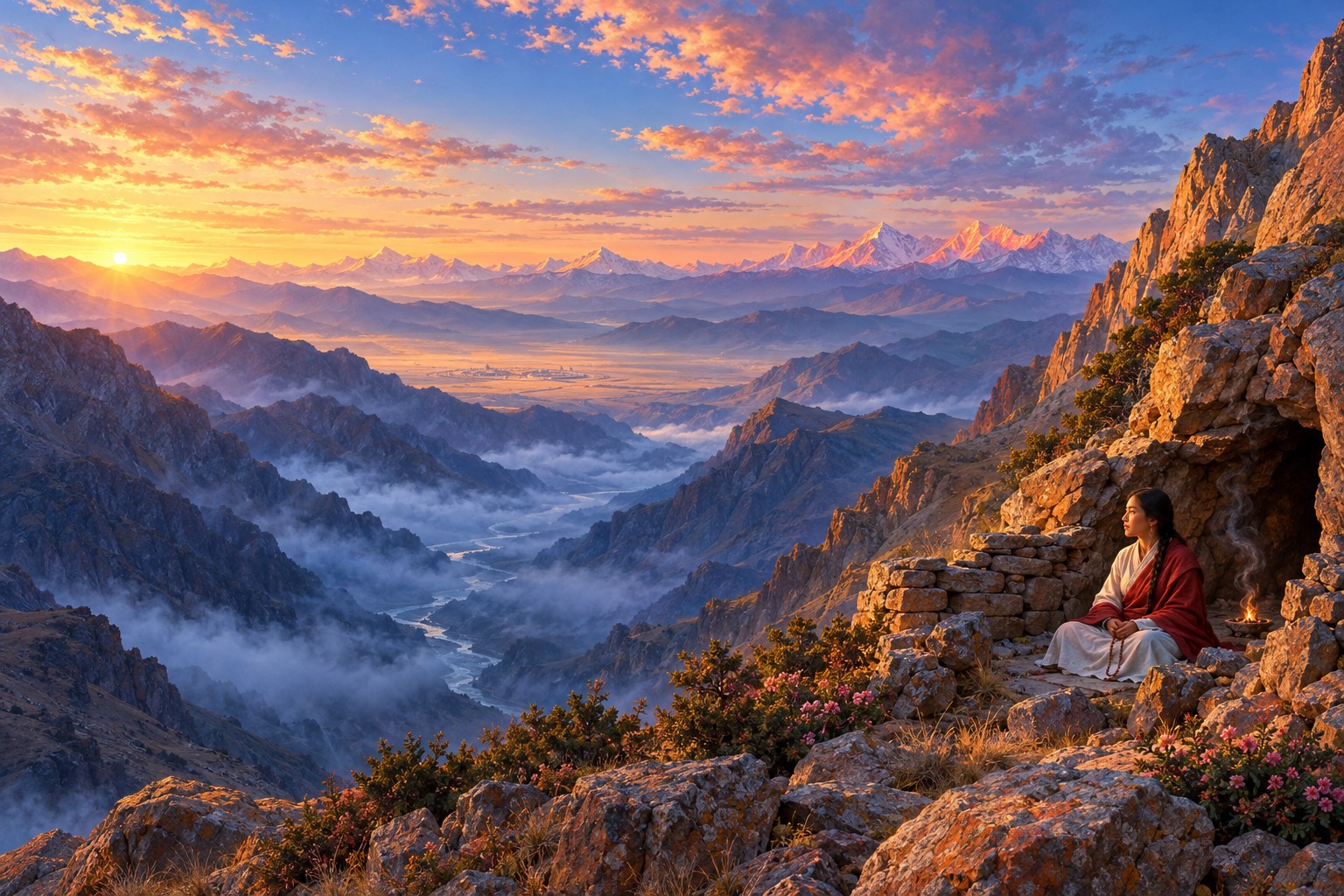
Tibet remembers many treasure revealers, and very few of them were women. One of the earliest was a herding girl from the south who came to be called Jomo Menmo. She lived from 1248 to 1283, a short life, and the tradition remembers its ending as one of the most wondrous in all its histories.
Most of what we know comes from a brief life written in the nineteenth century by Jamgön Kongtrul, in his book of the lives of the treasure revealers, and from a few later retellings. The Treasury of Lives says it honestly: "Little about her is known outside of legend." What follows is her story as the tradition tells it.
A girl from E
She was born near Zarmolung, in a district of southern Tibet called E. Kongtrul places her birth close to a cave where Guru Rinpoche, the eighth-century master Padmasambhava, is said to have meditated.
Her father, Dorje Gyalpo, was a ngakpa, a lay practitioner of tantra who was not a monk. He came from a family line called Dak. Her mother was Pema Paldzom. They named their daughter Pema Tsokyi. Retellings translate the name a little differently, as "Lotus of the Ocean" or "Joyful Lotus Lake."
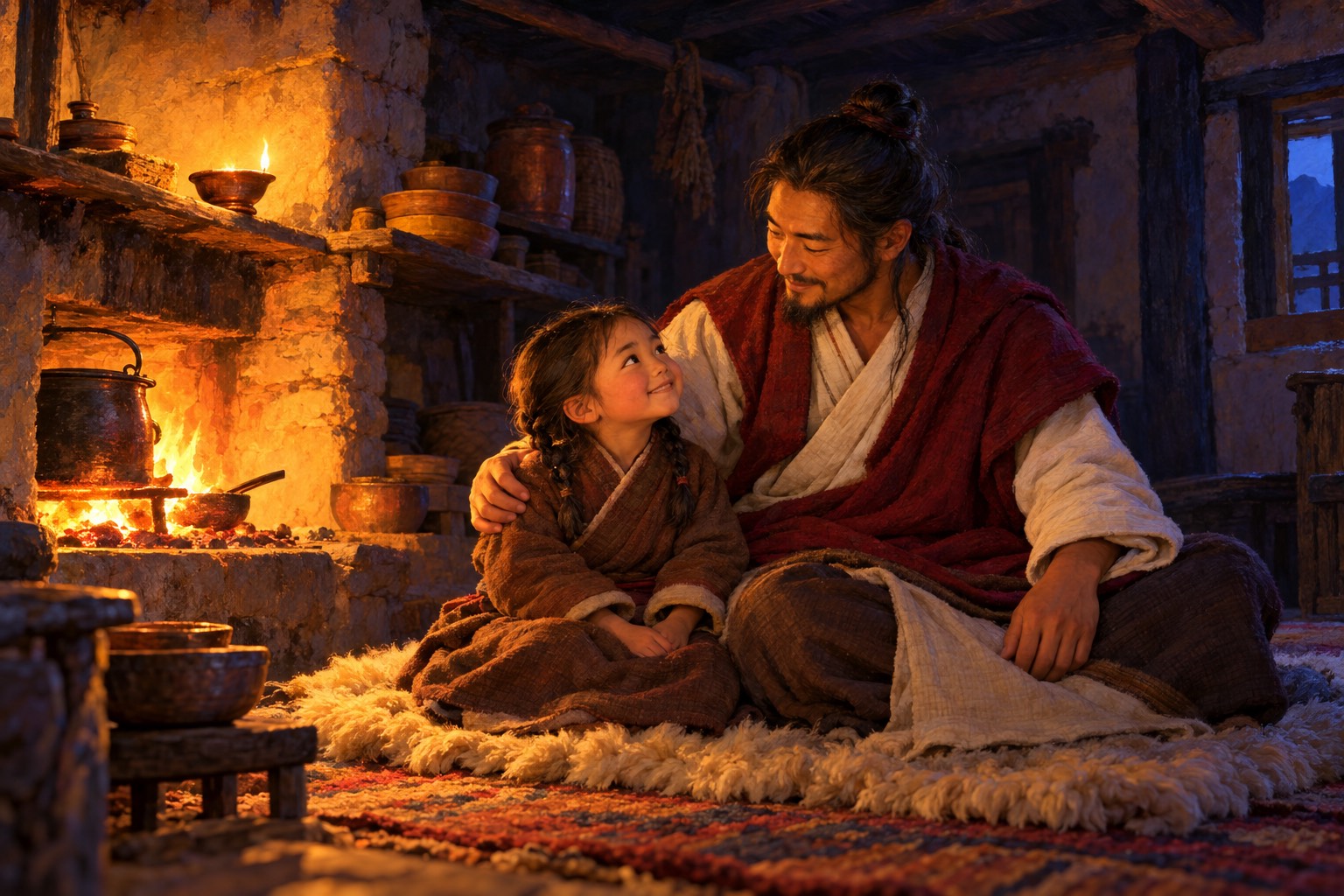
The family was neither rich nor poor, and she was much loved as a small child. But when she was five her mother died. Her father married again, and the girl was sent out to herd the animals and do whatever work the household needed. Kongtrul notes, in a single phrase, that it wore her down.
A sound from the rock
In the spring when she was thirteen, she was herding on the high pastures of Zarmolung. Above them rose a crag called the rock where the great garuda soars. The garuda is the great mythic bird of Himalayan lore. Near the crag was a cave remembered as one of Guru Rinpoche's places of practice, the Secret Cave of Great Bliss.

Tired, she lay down and dozed. The traditional account says a beautiful sound coming from the rock woke her, and she saw that the door of the secret cave had opened. Without hesitating, she went in.
Inside, the story goes, she found herself among a great gathering of dakinis, the female wisdom beings named in the fifth line of the Seven-Line Prayer, who were holding a sacred feast. At their head was Vajravarahi, a female buddha honored as a queen of the dakinis. One modern retelling says it was Yeshe Tsogyal herself, Guru Rinpoche's great disciple, who appeared in this form.
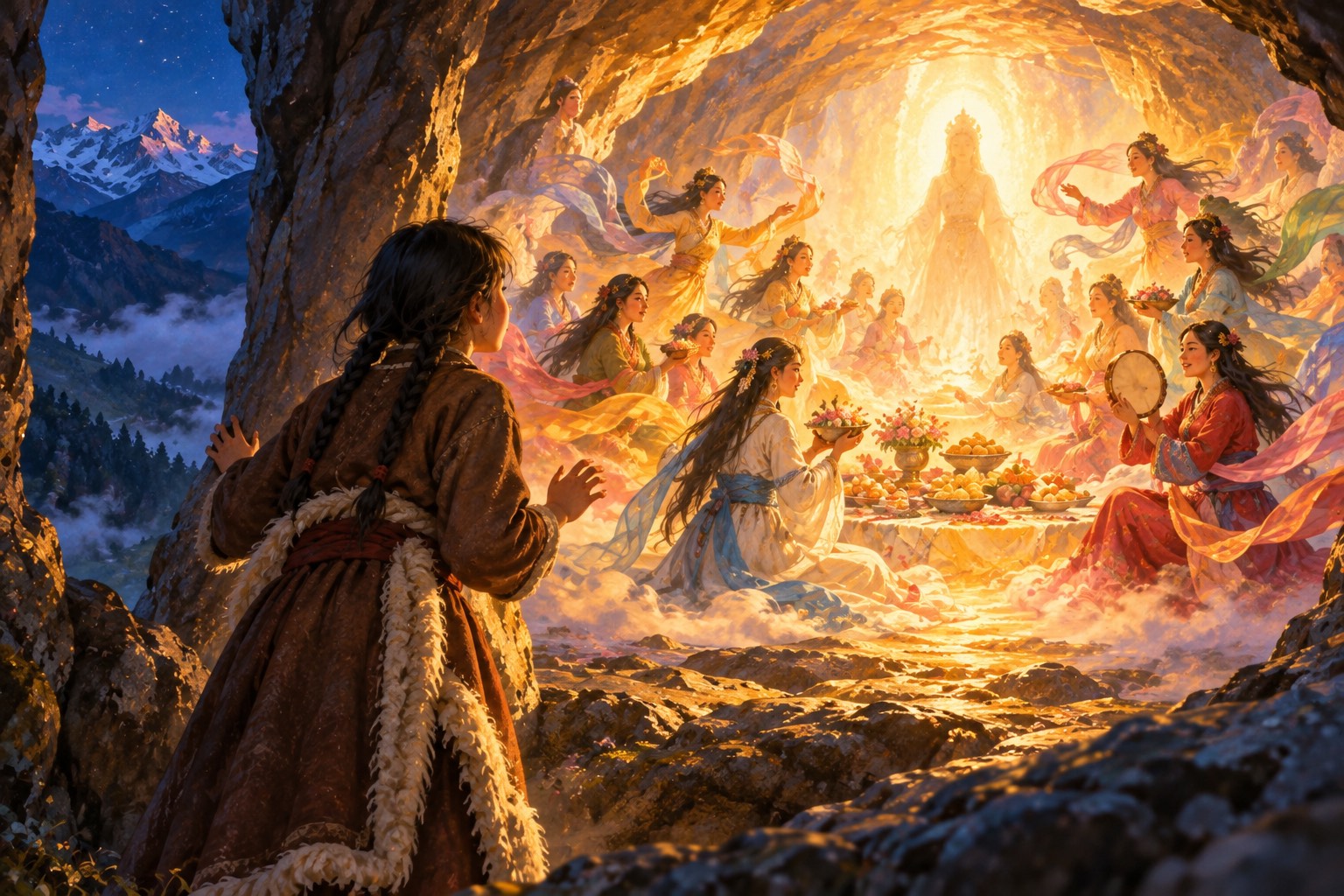
Kongtrul tells that the dakini welcomed her as a daughter of good family. She took a small scroll from the rock behind her, touched it to the girl's head and placed it in her hands. It held, she said, the instructions of the Khandro Sangwa Kundü, "The Union of All the Dakinis' Secrets." If the girl practiced it in deep secrecy, she would reach the highest attainment.
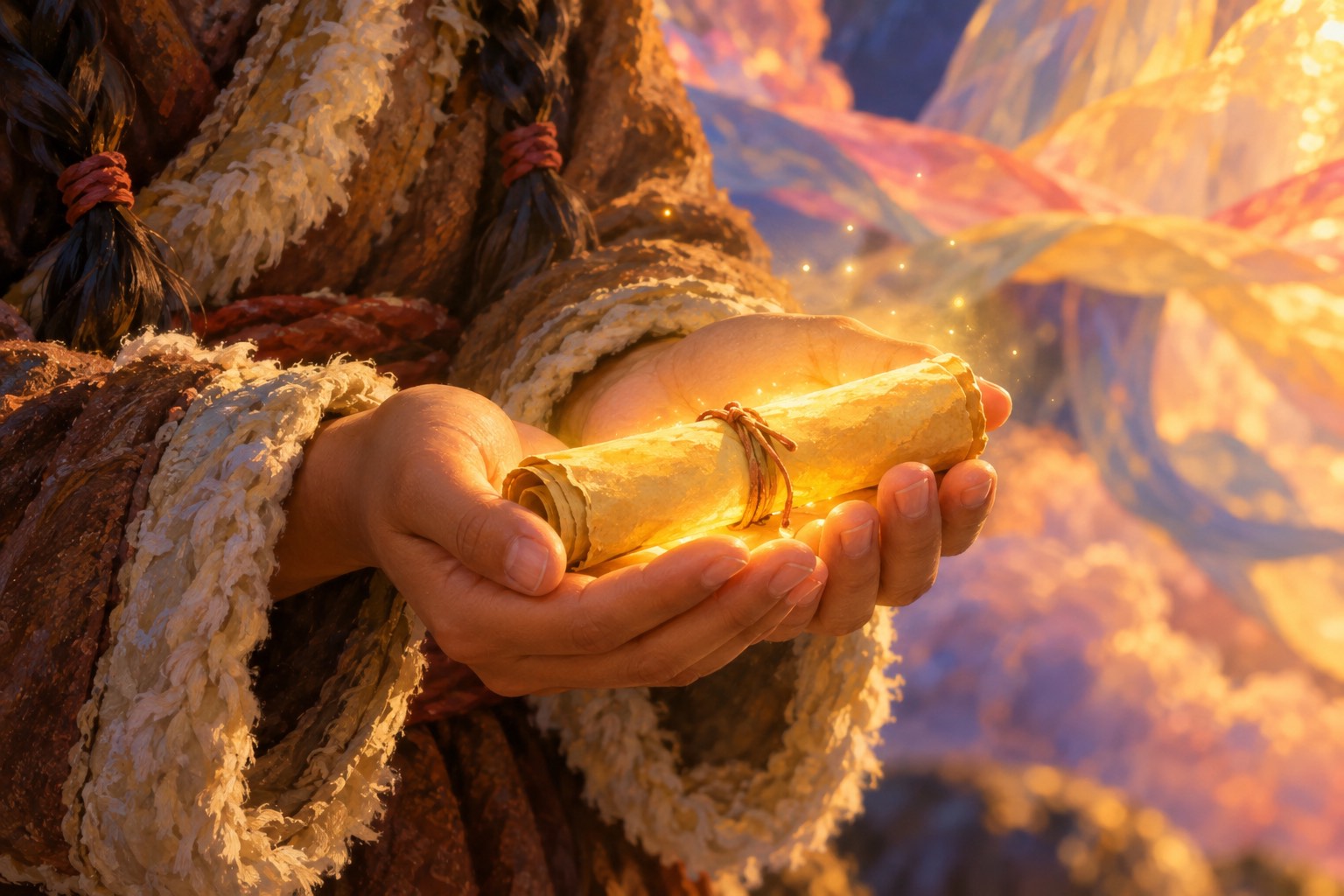
Then, the account says, the gathering dissolved like a dream, and she went home with her animals. The retellings differ on small details, such as whether she entered the cave in a dream or awake. All of them agree that she came back changed.
The name that stuck
From then on, words of Dharma poured out of her by day and by night. She sang songs of realization as they came to her, and danced, and seemed to know what others were thinking. A few people saw real attainment in this.
Most did not. They decided she had slept out on the mountain and been possessed by a menmo, a kind of local spirit. Jomo means "lady," and so she became Jomo Menmo, the lady of the menmo. One modern retelling blames the local religious authorities for turning people against her.
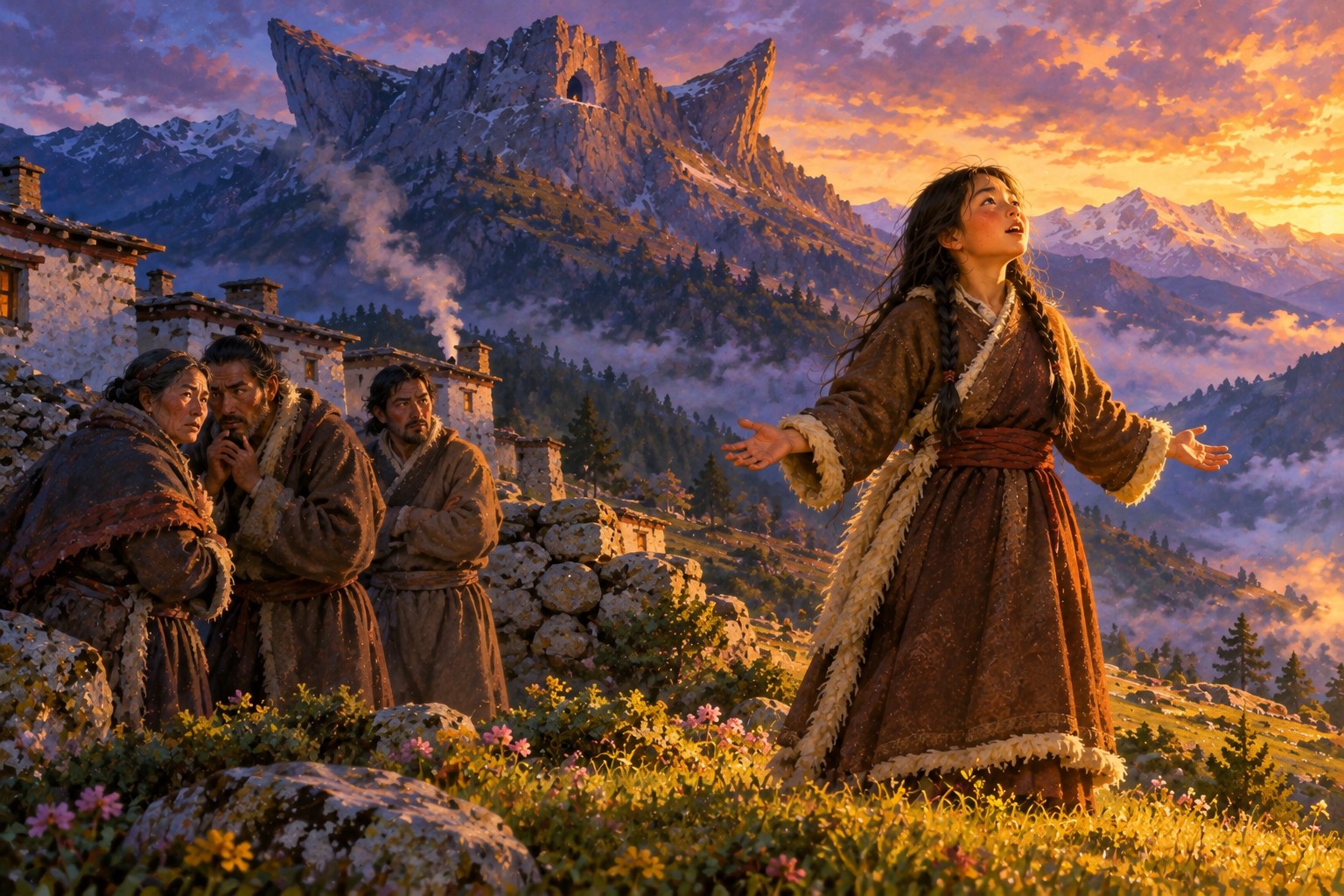
Weary of the suspicion, she left. Kongtrul says she no longer felt tied to her homeland, and set out with no fixed place to go. She never went home again.

Meeting Guru Chöwang
Her road led west to Layak in Lhodrak, the home of Guru Chöwang (1212–1270), the treasure revealer remembered for bringing the Seven-Line Prayer to light. His own story is told elsewhere on this site. The accounts say that simply meeting him awakened in her a wisdom that was effortless and already her own.
Guru Chöwang, for his part, is said to have recognized her as the foremost of five spiritual partners whom Guru Rinpoche had foretold for him. She became his sangyum, his partner in practice. Kongtrul writes that through her he was at last able to understand a tantra he had found but could not unlock, and to put it into Tibetan. Each, he says, was of the greatest benefit to the other.
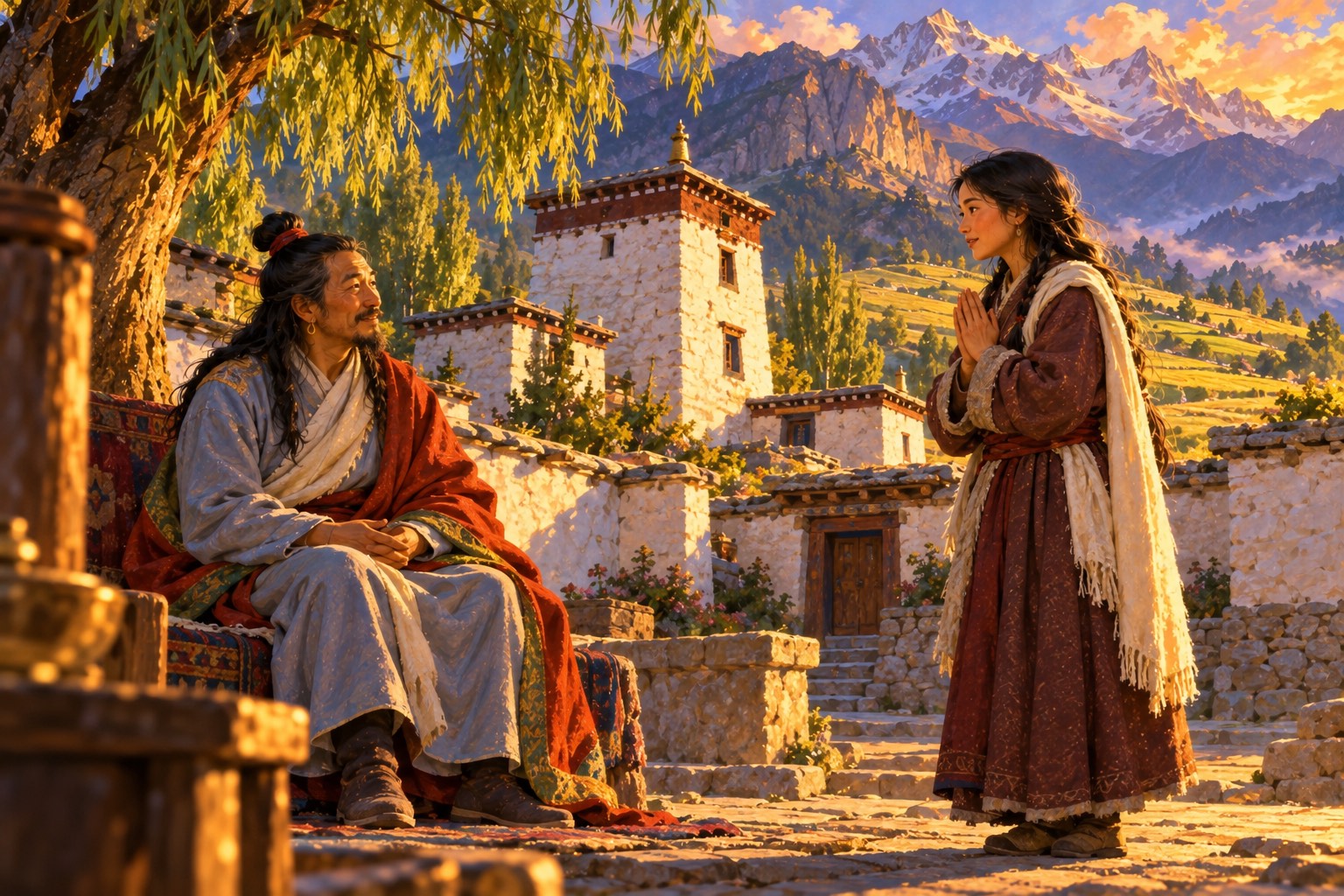
She did not stay long. If Guru Chöwang died in 1270, as most sources say, she was still a young woman of about twenty when they parted.
Before she left, he gave her counsel. The dakinis' scroll, he told her, was the heart practice of Yeshe Tsogyal, whom he saw as her own former life. But the time to spread it had not come. She should keep it secret, practice it herself and wander through central Tibet, helping others in hidden ways. In the end, he said, she would reach the dakinis' realm without leaving her body behind.
The wandering years
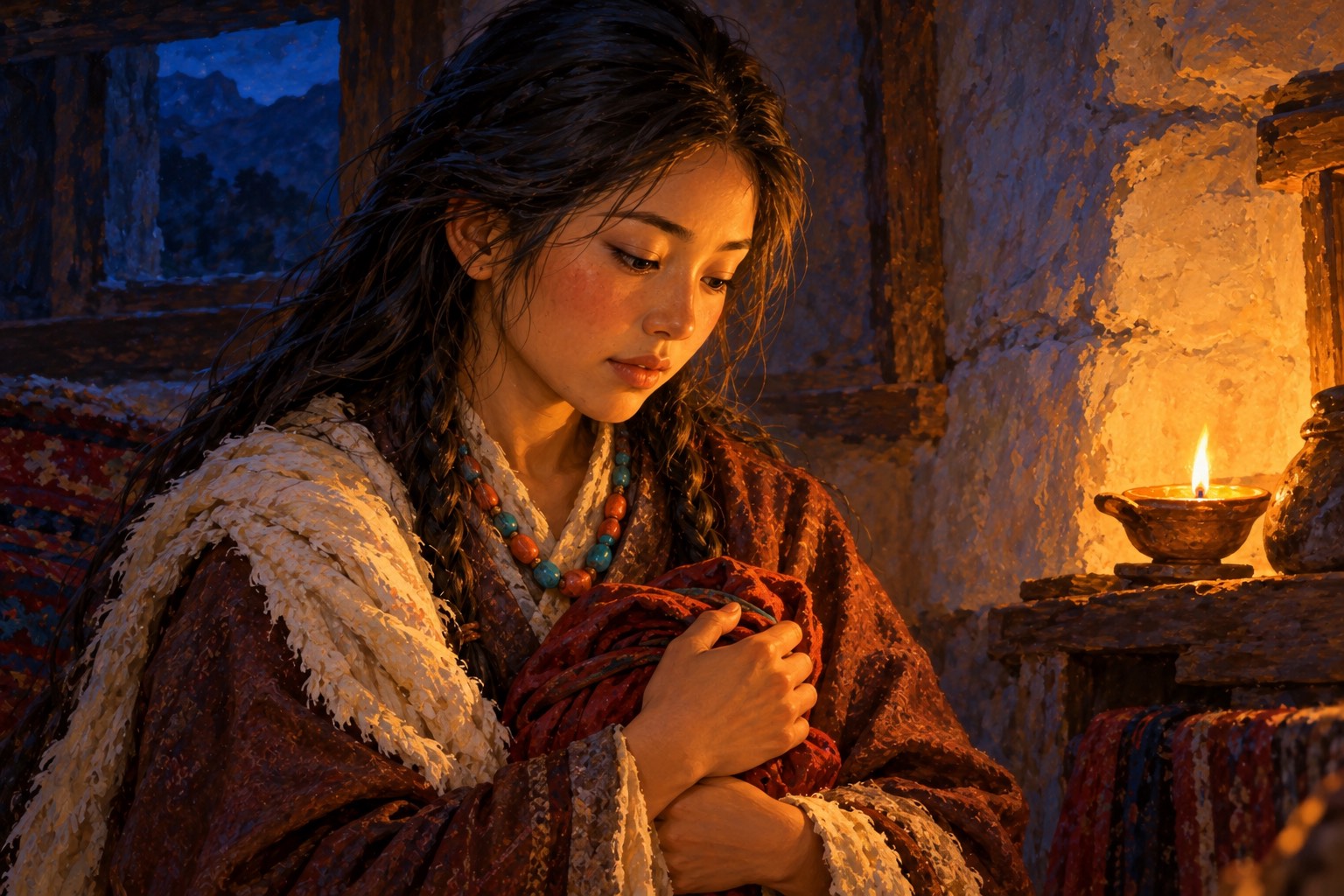
So she wandered. Two women went with her, yoginis whom Kongtrul calls fortunate. Their names have not come down to us. Together they travelled through Ü and Tsang, the heartlands of central Tibet, and west as far as Dingri, beneath the high Himalaya.

The sources say little about these years, and it is kinder to them not to fill the silence with guesses. They say only that she helped others quietly, in ways not meant to be seen. Retellings remember her guiding many people this way, often without their knowing who she was.
The tenth day
In 1283, when she was thirty-six by Tibetan reckoning, she climbed with her two companions to the top of a mountain. Kongtrul calls it Lhari, in a place called Drak in central Tibet. One modern retelling names it Taklhari, and another leaves it unnamed.
The day was the tenth of the first month of autumn. The tenth day of every lunar month is the day Tibetans keep for Guru Rinpoche. There the three women made a tsok, a feast offering shared in the presence of the awakened ones.
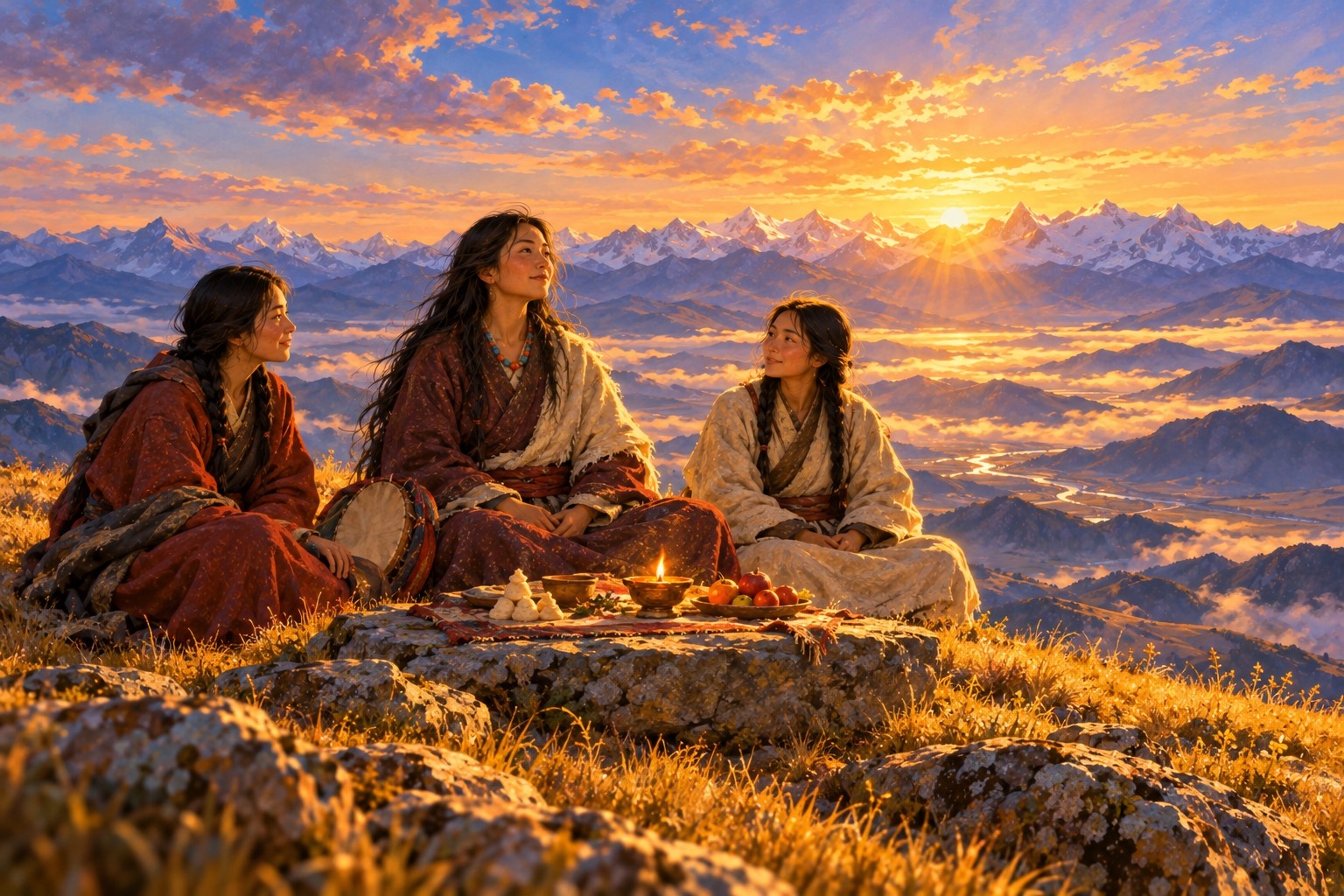
Then, the traditional accounts say, all three rose into the sky without leaving their bodies behind. Like the king of birds, they flew higher and higher until they reached the gathering of dakinis on the Glorious Copper-Coloured Mountain, Guru Rinpoche's pure realm.

Kongtrul adds a quiet detail. Herders on the slopes saw it with their own eyes. When they climbed up, they found a little of the feast scattered on the rock, and those who ate it, he says, settled naturally into meditation.
A treasure that waited
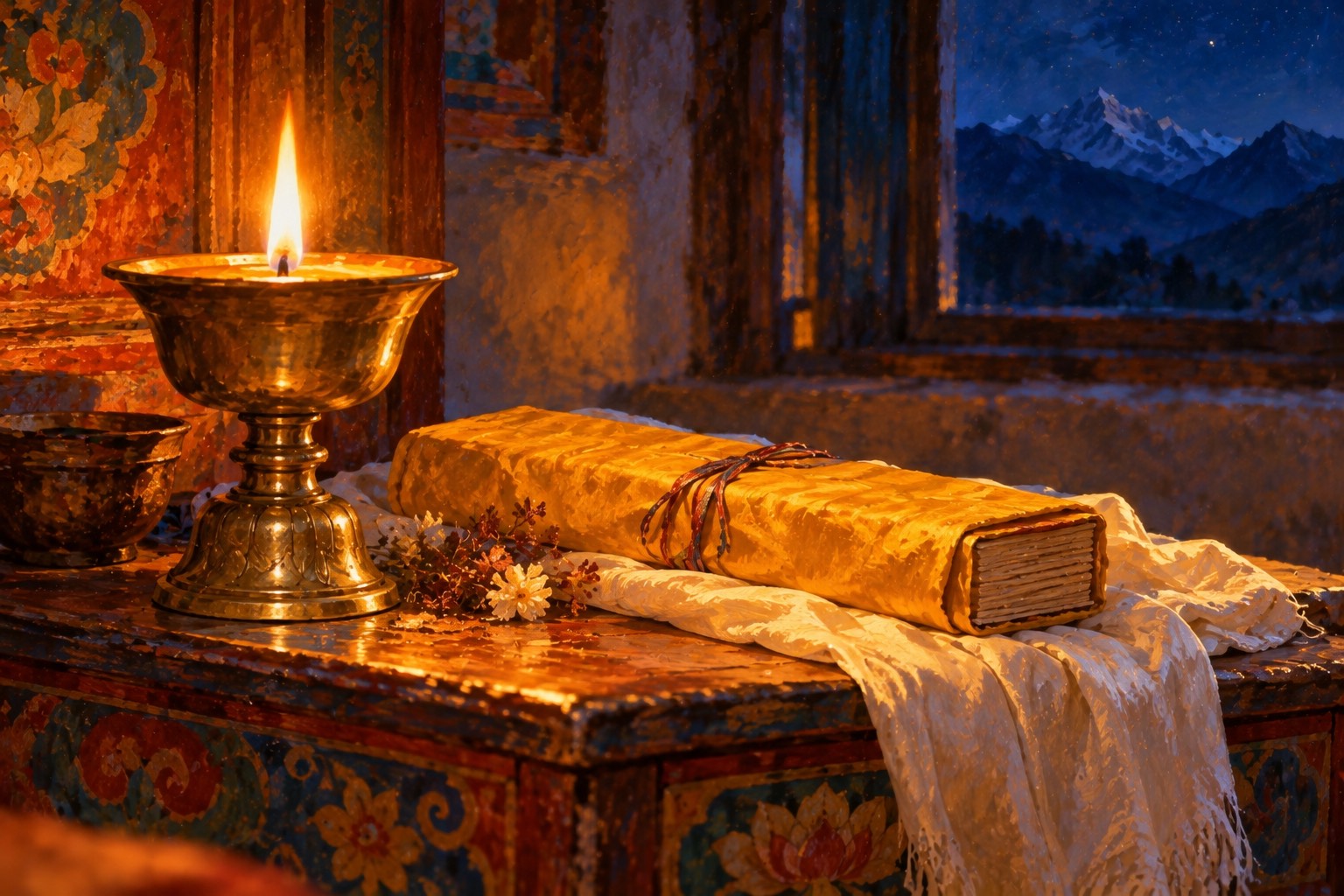
Her scroll did not stay among people. The tradition says it rested in the dakinis' keeping for nearly six hundred years. In the nineteenth century the great master Jamyang Khyentse Wangpo, regarded as Guru Chöwang's rebirth, revealed it again as a mind treasure, a teaching said to rise from the depths of the revealer's own mind.
Jamgön Kongtrul placed the cycle in the Rinchen Terdzö, his vast collection of treasure teachings, and wrote the life of Jomo Menmo that this story mainly follows. It is still passed on today. Its practices belong with qualified teachers, not on a page like this one, and the Find a Teacher page can help anyone who feels drawn to them.
A lineage of women
Jomo Menmo is remembered as an emanation of Yeshe Tsogyal and as the rebirth of Machik Labdrön (1055–1149), the great woman teacher of Chöd. In her a line of wise women meets: from Tsogyal, who gathered Guru Rinpoche's teachings and hid them, to a herding girl who found one again.
The line runs forward, too. In 1869 Khyentse Wangpo gave her teaching to Ayu Khandro, a yogini from eastern Tibet who lived past a hundred. It is said she began passing it on herself on the anniversary of Jomo Menmo's departure. Today Jomo Menmo is honored among the few women treasure revealers of early Tibet, and books such as Tsultrim Allione's Women of Wisdom have carried her story to new readers.

She was mocked as a madwoman, lost her home and spent her life on the road. Yet the tradition remembers her for none of that. It remembers her freedom, and the dakinis who were never far from her.
About the art
No traditional painting of Jomo Menmo was found on Himalayan Art Resources, so she is drawn with care rather than from a portrait. She wears the plain wool robe, white shawl and coral and turquoise beads of a thirteenth-century Tibetan lay yogini, with her hair loose. In her childhood scenes she wears a herder's brown robe and sheepskin. She has no wings, halo or rainbow scarves until the moment the tradition describes her rising into the sky. A modern line drawing of her, made for the Aro lineage, shows her as a mature woman, and the small hand drum by her side on the summit follows that kind of depiction.
Guru Chöwang is drawn after traditional portraits as a lay master, not a monk: a topknot bound in red, a pale blue robe and a large red-orange shawl. The temple behind him is Layak Guru Lhakhang, with the small square tower recorded there in 1950.
Dakinis appear as graceful women in silks of the five colours, white, blue, yellow, red and green, with rainbow scarves. Kongtrul names the leader of the gathering in the cave as Vajravarahi, a female buddha whose traditional form is fierce. The page shows her only as a figure of light, out of restraint, and leaves out the charnel-ground setting the Tibetan account describes.
Yeshe Tsogyal appears in her dakini form: a golden flower diadem, white, blue and gold silks, a white skull cup lifted as an offering and a wish-fulfilling jewel at her lap. The skull cup is a symbol of offering and impermanence. The feast on the summit uses simple hand-shaped dough offerings, called torma, and a small lamp. The nineteenth-century scene uses a brass butter-lamp chalice and a long Tibetan book wrapped in yellow silk, the way treasure texts are often kept. No image on this page contains writing.
Why this matters for practice
The fifth line of the Seven-Line Prayer pictures Guru Rinpoche surrounded by a retinue of dakas and dakinis, and Jomo Menmo's life is held at both ends by that retinue: a gathering of dakinis in a cave when she was thirteen, and, as the tradition tells it, the dakinis' gathering on the Copper-Coloured Mountain at the end. Between them was a hard and hidden life, lived faithfully. Reciting the prayer calls on that same company, and anyone can say it, whoever they are and whatever others think of them.

If something in this story stayed with you, you might pause tonight and recite the prayer once, calling on Guru Rinpoche and his retinue of dakas and dakinis, the company the girl from Zarmolung is said to have met.
Sources and further reading
- Tertön Gyatsa (Hundred Treasure Revealers), life of Jomo Menmo, by Jamgön Kongtrul, Tsadra Foundation, Rinchen Terdzö wiki, "Jo mo sman mo" (Internet Archive snapshot, 2024)
- Jomo Menmo, Rigpa Wiki (Internet Archive snapshot, 2024)
- Jomo Menmo, by Alexander Gardner (2010), Treasury of Lives (Internet Archive snapshot, 2021)
- Part VI: Khandro Sangdü and the female tertön Jomo Menmo, Dakini Translations (2020)
- Jomo Menmo, Aro Encyclopaedia (Internet Archive snapshot, 2023)
- Jomo Memo, 13th-century Tibetan tertön, BellaOnline
- Women of Wisdom, by Tsultrim Allione (1984; revised editions since), Snow Lion / Shambhala (book)
- Ayu Khandro, Wikipedia
This retelling is waiting to be read by a knowledgeable practitioner. Where the traditional accounts differ, the story says so; if you notice a mistake, please tell us through Share Your Story.