
Almost everything this site tells about Guru Rinpoche's beginnings, the lake, the lotus, the king who found a child sitting in a flower, reached Tibetans first through one man. He lived eight hundred years ago in Lhodrak, a region of deep valleys in southern Tibet, and his name was Nyangral Nyima Özer.
This is his story, told as plainly as I can: where the tradition speaks, and where historians add their own careful notes.
A child of the Nyang clan
The histories say he was born in 1124 in Tamshul, a river valley in Lhodrak not far from today's border with Bhutan. A few Western books give 1136 instead, a date the Treasury of Lives, a peer-reviewed online encyclopedia of Tibetan lives, considers almost certainly mistaken.
His family, the Nyang, was an old clan whose members had served Tibet's emperors in the eighth century. His father, Nyangtön Chökyi Khorlo, was a lay tantrika: a practitioner of the Buddha's tantric teachings who kept a household rather than becoming a monk. His mother was Jomo Yeshe Drön.
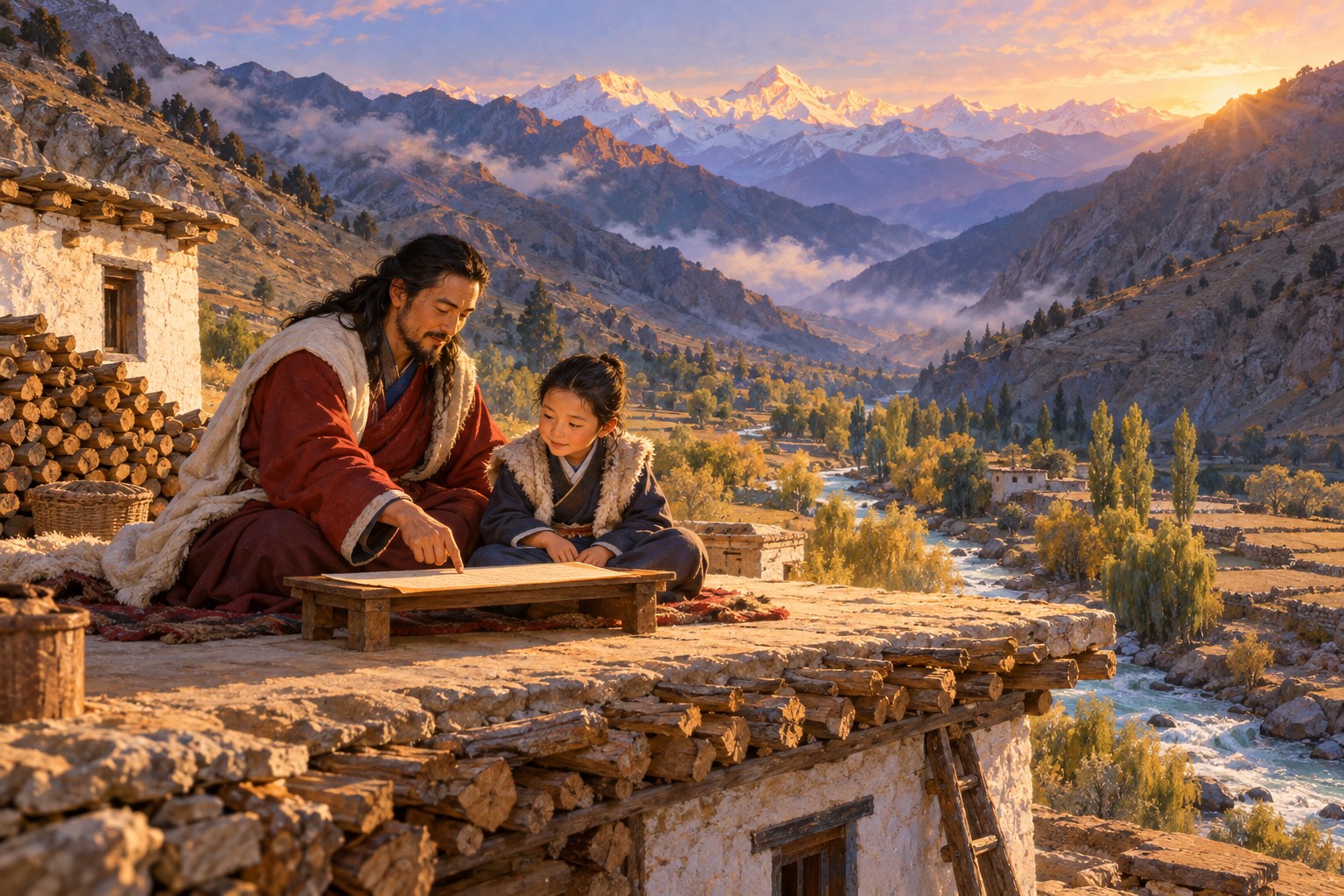
The life stories say the baby bore auspicious marks on his body, and that his parents kept him out of public view, teaching him letters and meditation in a family retreat. He learned to read very young and memorized the clan's texts with ease. No brothers or sisters are recorded. It was, it seems, a quiet and rather solitary childhood.
Dreams at seven

From the age of seven, the traditional accounts say, he had dreams and visions in which wondrous figures, Guru Rinpoche among them, told him who he was and what he would one day do: bring hidden teachings to light.
His father gave him empowerments, ceremonies that open a practice to a student. The most important was for Hayagriva, a fierce, protective deity of the lotus family, who stayed at the heart of his practice all his life.
In his teenage retreats, the accounts continue, he began to remember past lives, a chain of sixteen that reached back to King Trisong Detsen, the eighth-century emperor who invited Guru Rinpoche to Tibet. Tradition honors him as an emanation of that king, though the sources word it differently: Rigpa Wiki calls him the king's mind emanation, a verse of homage on Lotsawa House his body emanation.
Historians notice something here. Daniel Hirshberg, whose book Remembering the Lotus-Born (2016) is the first full scholarly study of Nyangral, observes that he seems to be the first person in Tibet to recall a whole sequence of past lives like this, long before the famous reincarnation lines such as the Karmapas.
Leaving home
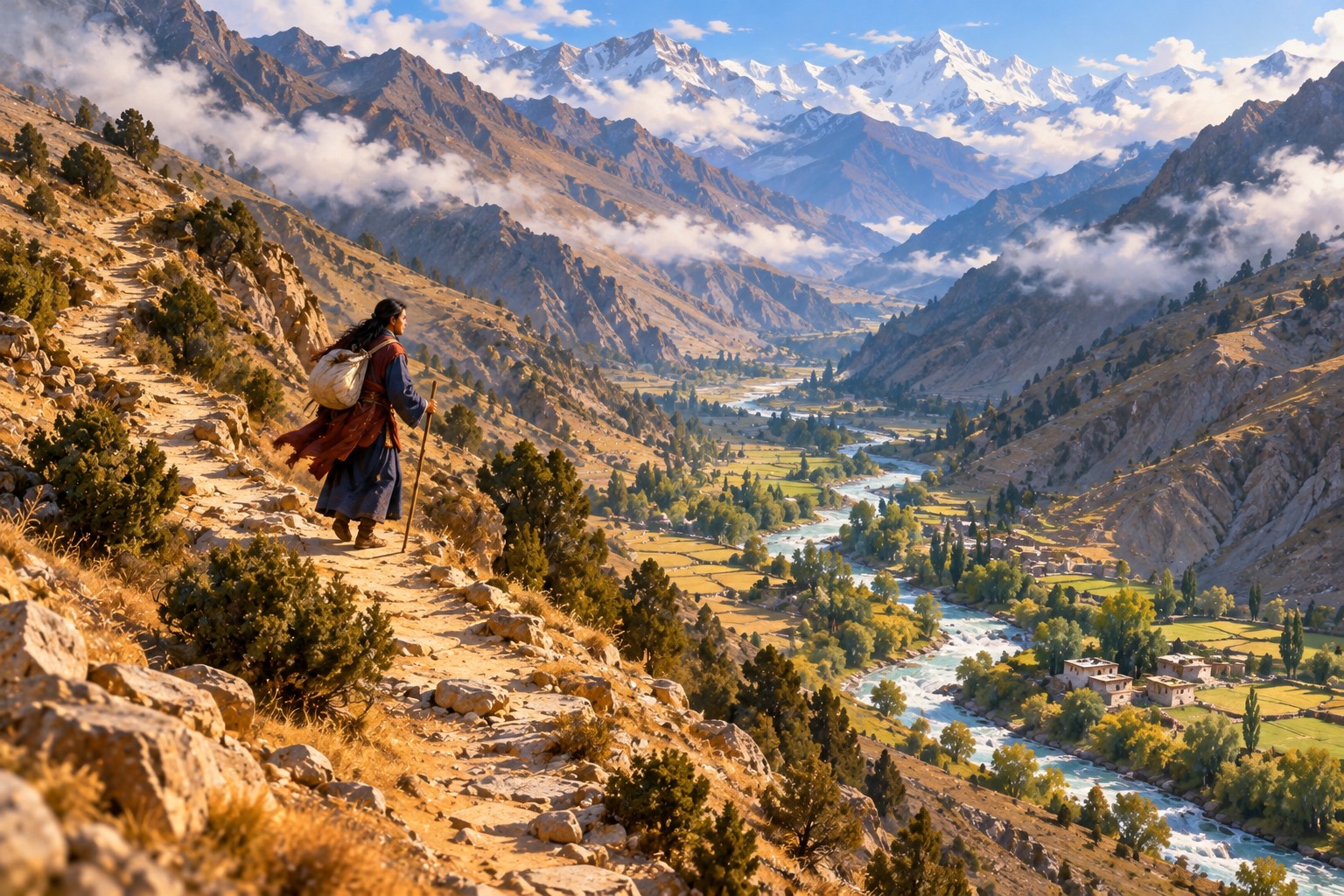
Near the end of his teens, perhaps after his father died, he left the valley to study. He received the root scriptures of what would soon be called the Nyingma, the "Ancient" school, and teachings that the Indian master Padampa Sangye had brought to Tibet.
Two of his teachers were treasure revealers themselves, Lama Rashak and Drubtob Ngödrub. Besides their own teachings, the biographies say, they gave him written guides that would one day lead him to treasures of his own.
A word about treasures. Terma, "treasure," is the tradition's name for teachings and sacred objects that Guru Rinpoche and his circle are said to have hidden in the eighth century, to be found when the time was ripe. Those who find them are called tertöns, treasure revealers.
A poor hermitage
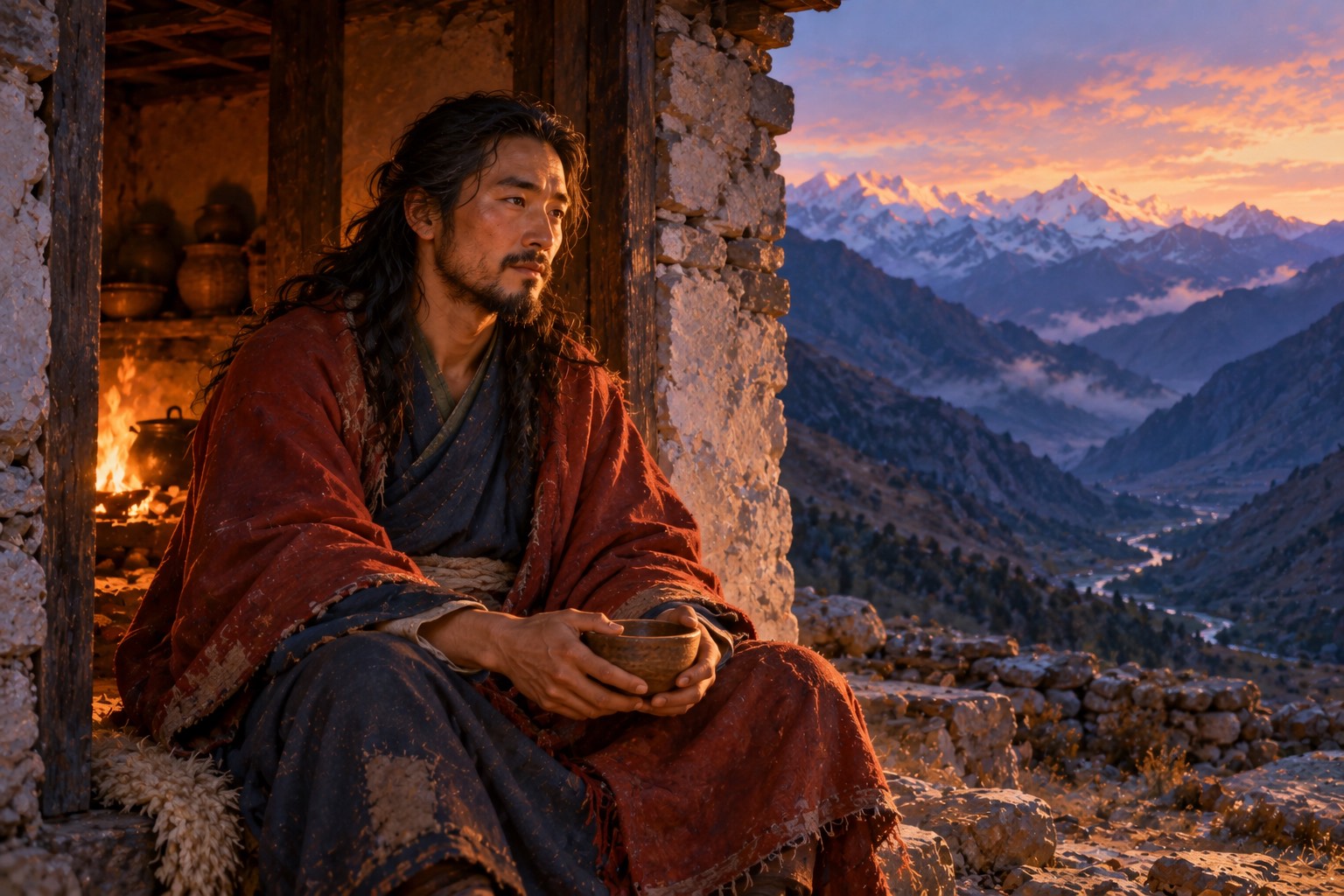
Nyangral built a small hermitage at a bare, lonely place called Mawochok, high on a mountainside in Lhodrak. He was poor. To keep his retreat going, he performed rituals for local people as a tantrika for hire.
The life stories say he stayed despite the hardship because several strange encounters kept telling him that this ground was sacred.
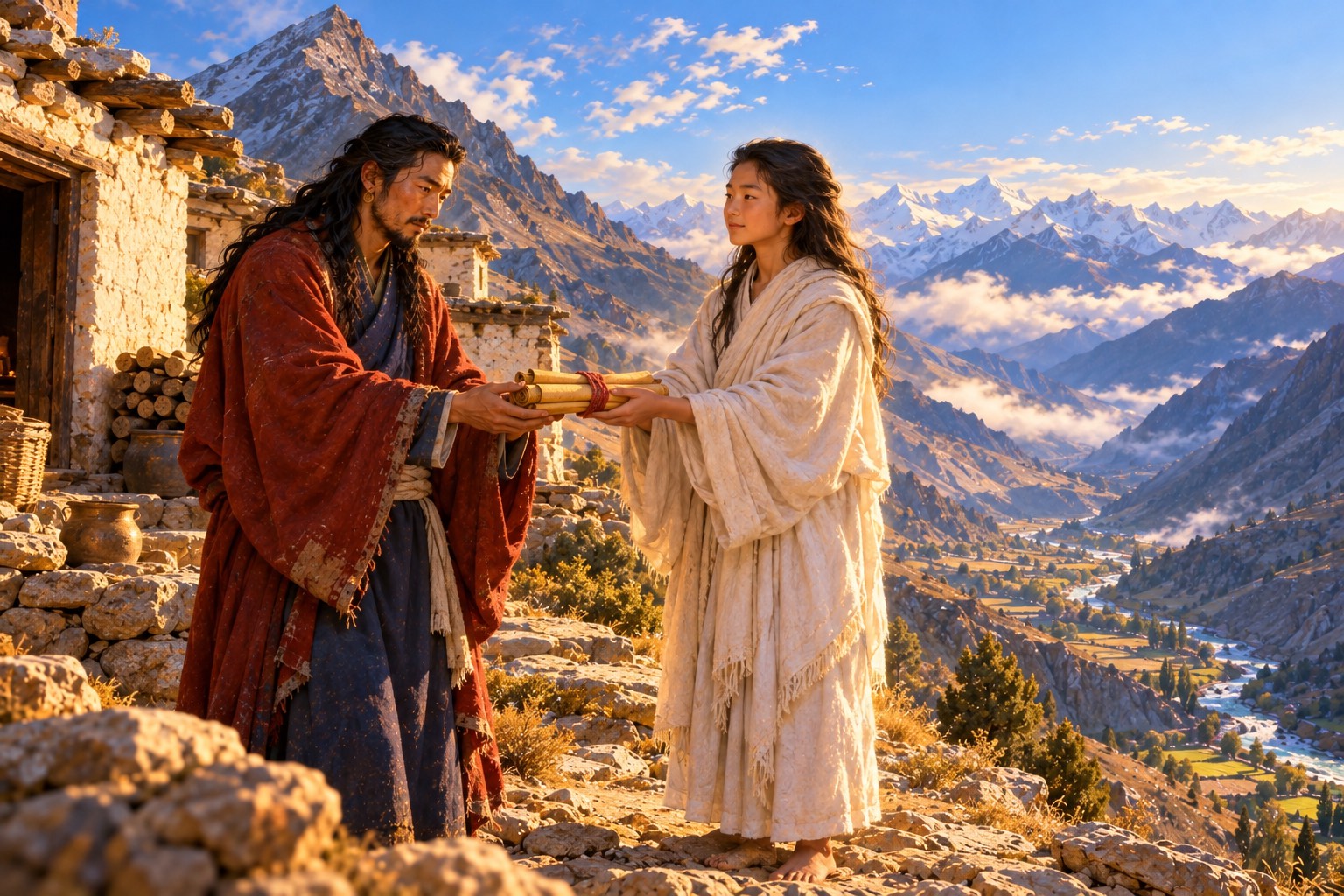
Then one day, they say, a young yogi met him, handed him treasure certificates, written guides to a hiding place, and left as mysteriously as he had come. Nyangral concluded that the young man had been an emanation of Guru Rinpoche.
The cave in the rock
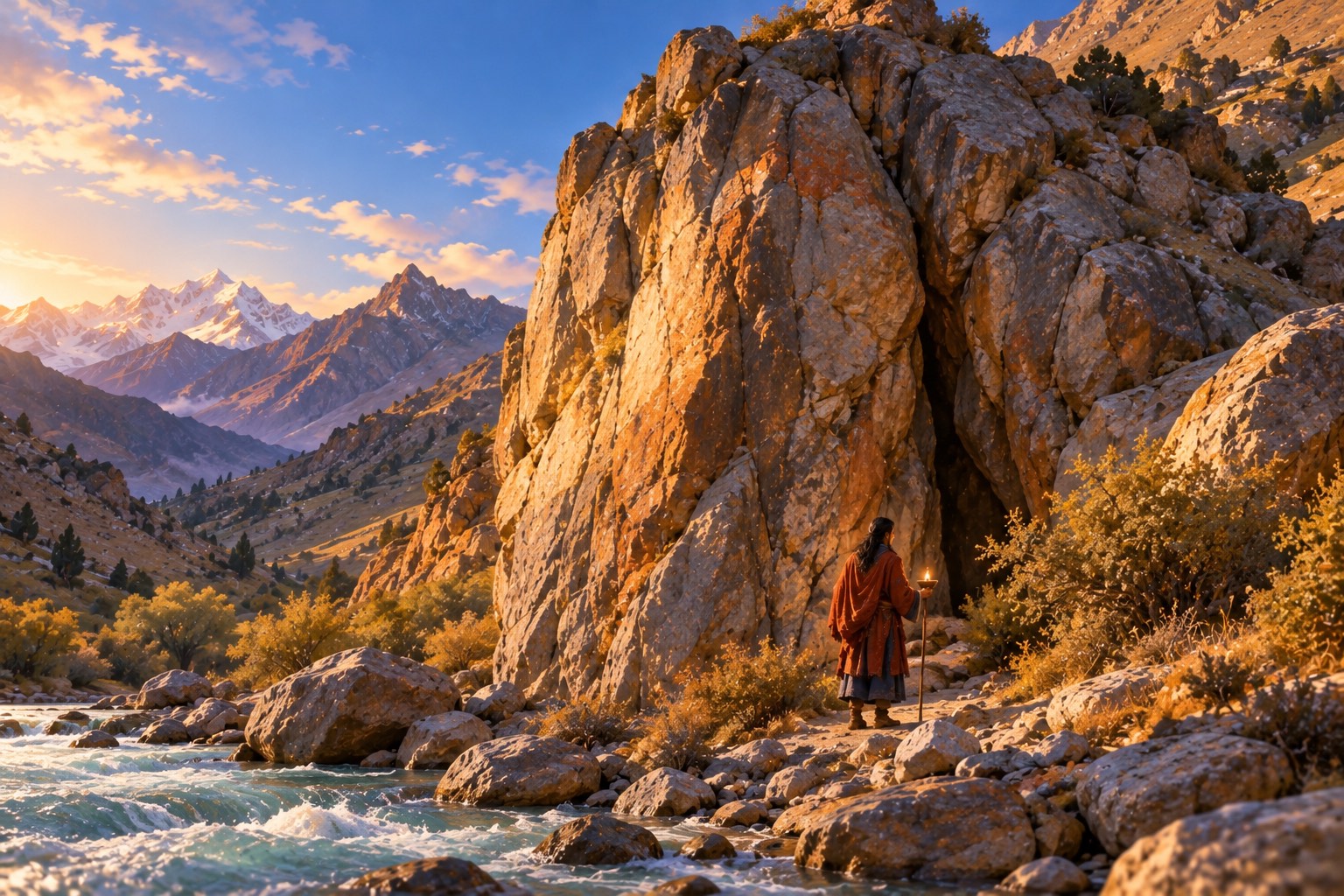
The papers pointed, he understood, to Drak Sinmo Barje, a great formation of rock a little way down the river from his hermitage.
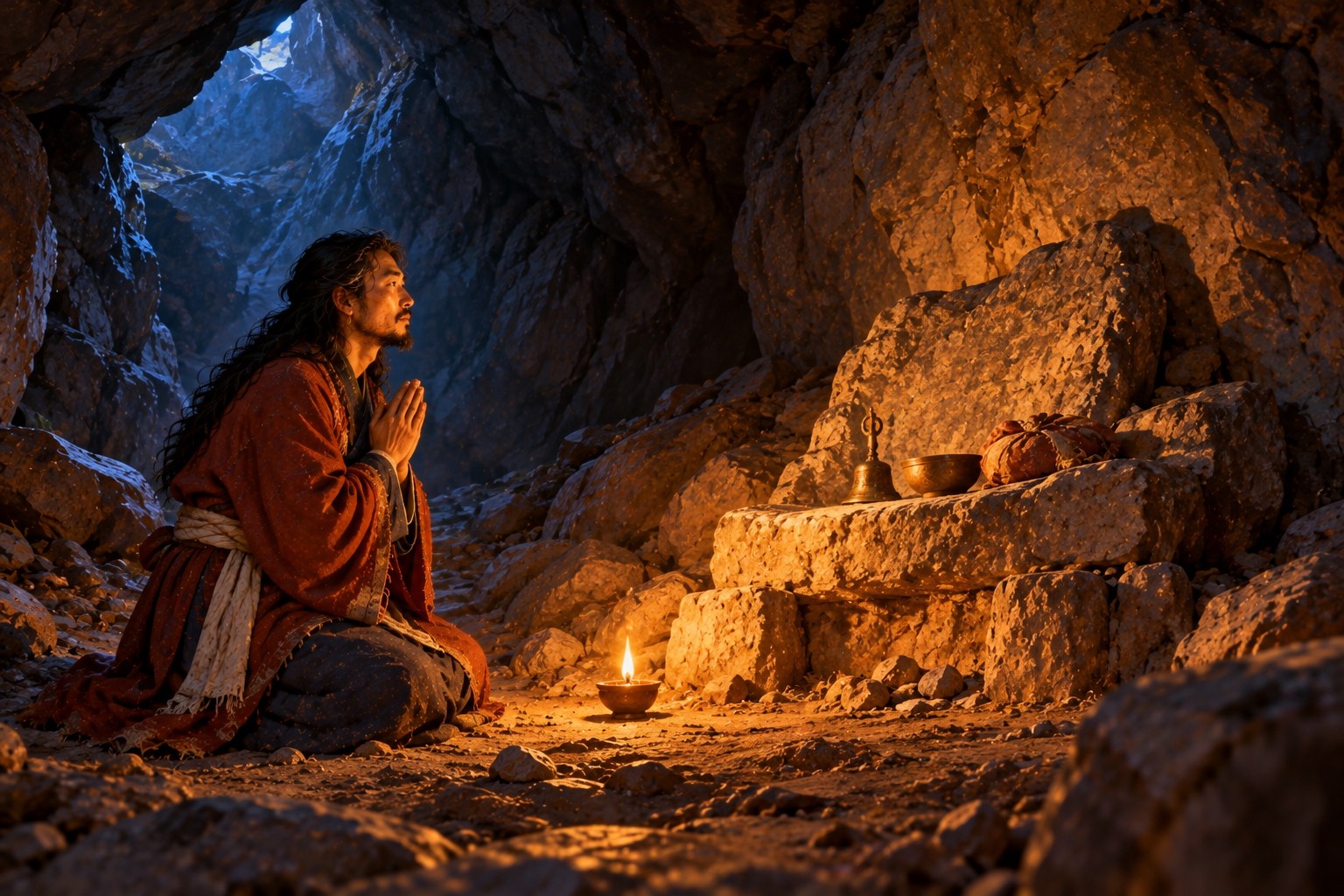
Inside it, the accounts say, he found a hidden cave that had been Guru Rinpoche's own assembly hall. A throne and ritual implements still rested at its center, and caches lay buried in the ground around them.
Some of his most important finds came from here. One was a cycle on the Great Compassionate One, Avalokiteshvara, the bodhisattva of compassion. It grew into the collection known as the Mani Kabum, which tells how Avalokiteshvara came to be loved as Tibet's patron and helped carry his six-syllable mantra across the land.
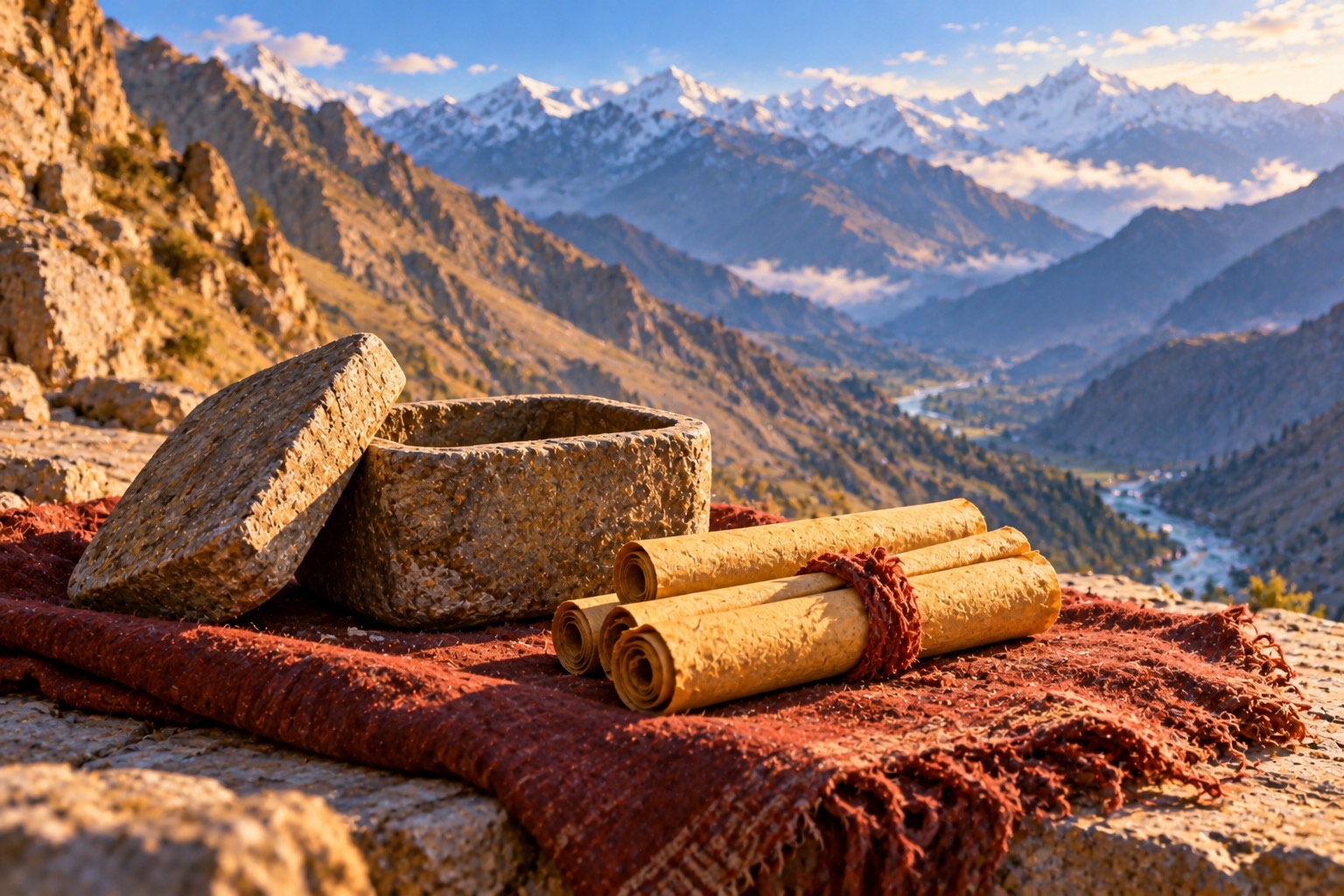
Over the years he found more at other sites, many of them ancient temples a few days' walk from Mawochok: texts, statues, ritual implements, medicines and blessed substances. According to the Treasury of Lives, all his treasures were physical ones, found in the earth or in buildings rather than in the mind.
The Gathering of the Sugatas
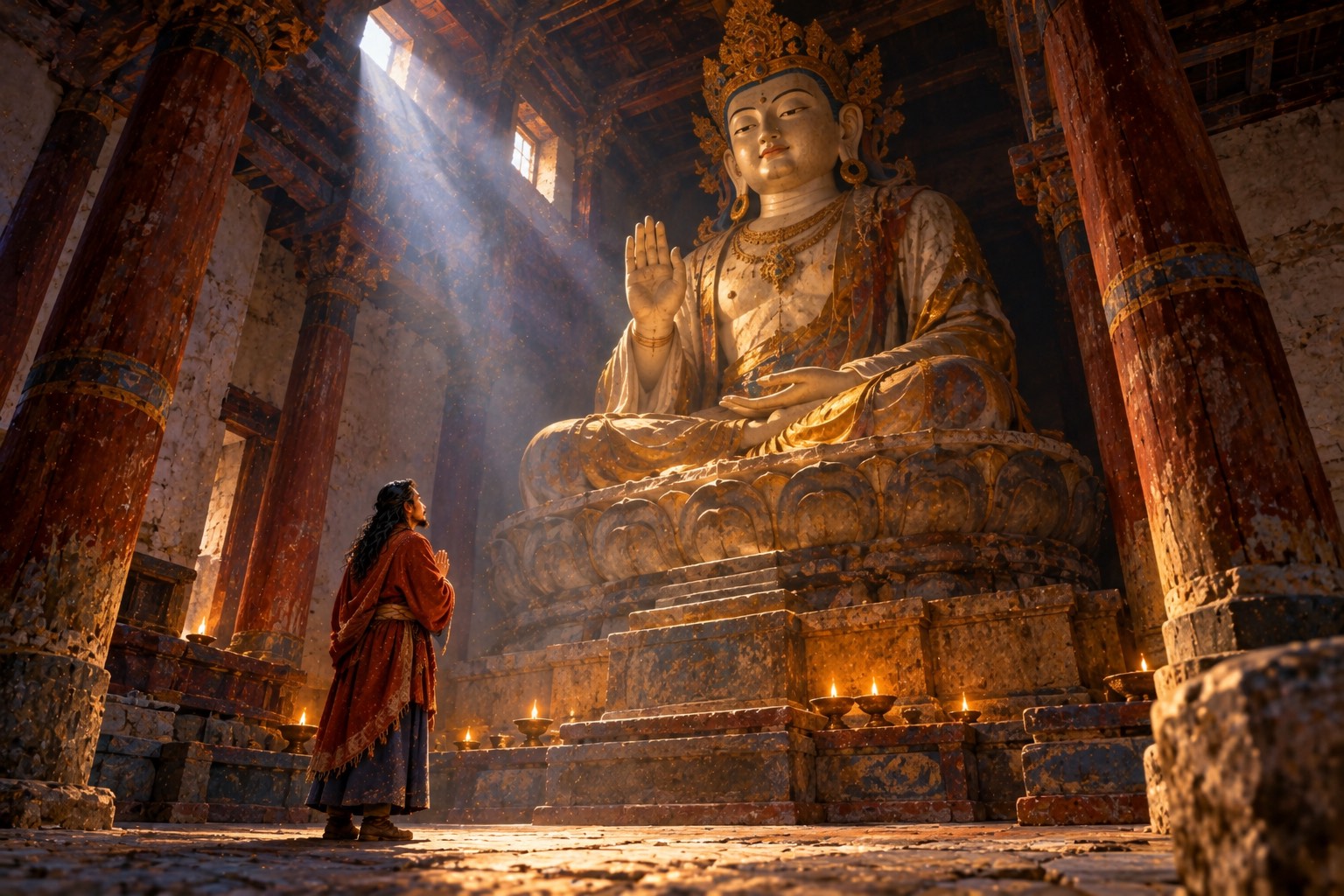
One famous find, the Treasury of Lives says, came from inside a huge statue of the Buddha Vairochana at Khoting, a seventh-century royal temple in Lhodrak. It was the Kagyé Deshek Düpa, "The Eight Commands: Gathering of the Sugatas," a great cycle centered on eight meditation deities. Its practice belongs with a qualified teacher, so we leave it there.
The sources tell this find in different ways. Another early biography says he simply received the cycle from Lama Rashak, in seven small volumes. The notes to a prayer on Lotsawa House place it at Sinmo Barje, and a verse of homage there names both places.
However it came, it took root. Later revealers, Guru Chöwang among them, brought new versions of the Eight Commands to light, and the cycle remains a foundation of Nyingma practice.
The Copper Island
But the work he is best remembered for is a book: the Zangling Ma, the "Copper Island" (some render it "Copper Palace"), the first complete life story of Guru Rinpoche.
Tradition says that Yeshe Tsogyal, Guru Rinpoche's closest disciple, recorded it and hid it as treasure, and that Nyangral brought it to light. It is available in English as The Lotus-Born. Its pages hold the story this site opens with: the ray of light from the Buddha Amitabha, the lotus on Lake Dhanakosha, the eight-year-old child at its heart, King Indrabhuti's boat.
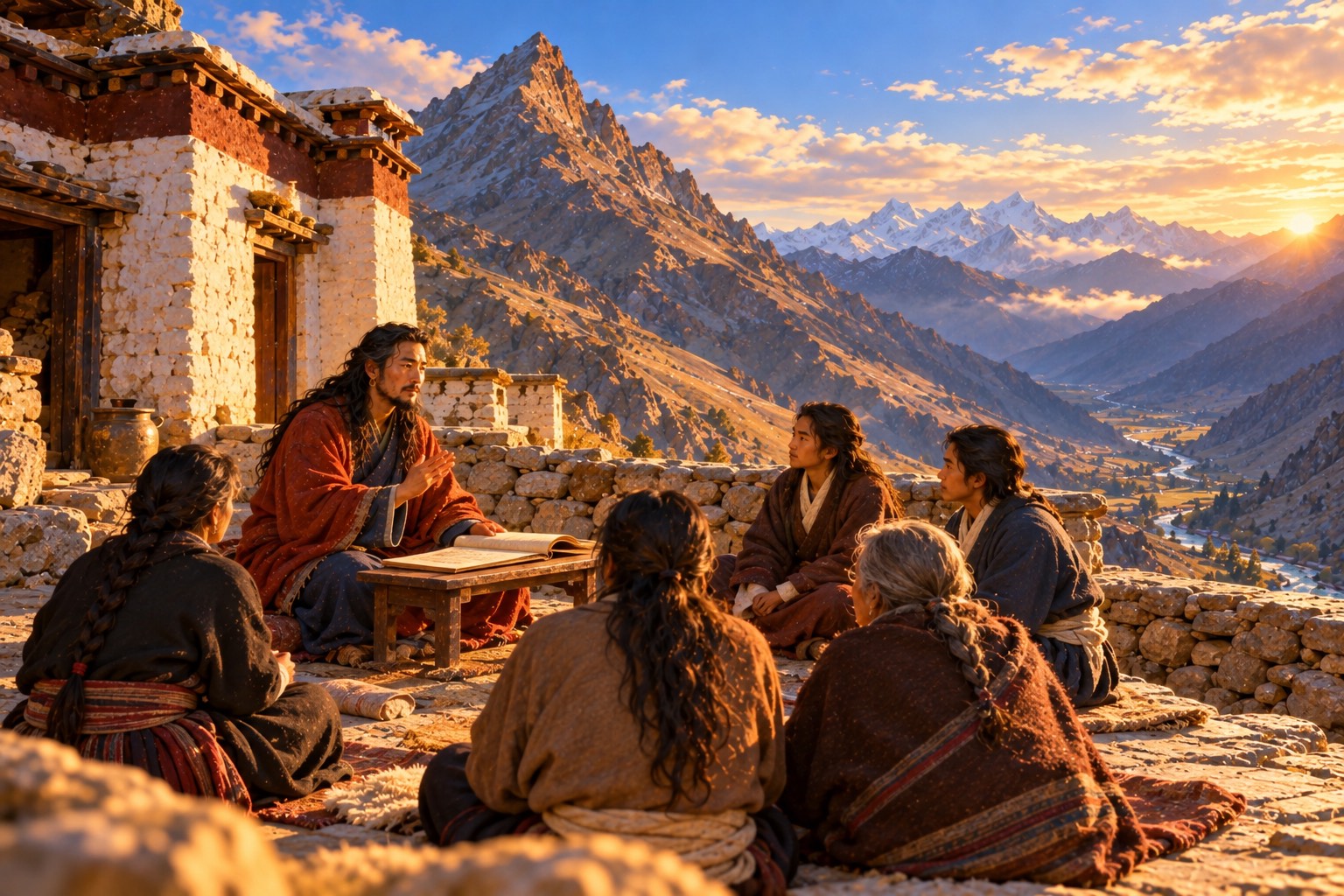
It also gave Tibet a larger picture of who Guru Rinpoche was. Earlier records remembered him mainly as a powerful ritual master from India who came to Tibet in the eighth century. The Copper Island shows him as a buddha who tamed the land's hostile forces, established the Dharma and hid treasures for the future. Many later life stories grew from it.
Historians describe its origins a little differently. Hirshberg argues that the Copper Island was not first presented as a treasure at all, and that Nyangral shaped it from Indian Buddhist storytelling traditions he knew well. Rather than debunking him, Hirshberg calls him "an excavator of Tibet's past and the author of its future."
Devotion and scholarship need not quarrel here. Both agree that when Tibetans picture Guru Rinpoche's birth and life, they see it, in large part, through Nyangral's eyes.
Home at Mawochok
After most of his revelations, he settled at Mawochok with his wife, Jobuma, whom he honored as an emanation of Yeshe Tsogyal, and their two sons, Namkha Özer and Namkha Pel. Students and patrons came, and the poor hermitage grew into a temple and residence.
In 1192, the Treasury of Lives says, he named the disciples who would carry each of his cycles, gave his last instructions, and said it was time to go to Dewachen, Amitabha's pure land. His remains were placed in a great reliquary at Mawochok. Some sources give 1204 for his death, but one of his heirs died in 1199, which argues for the earlier year.
The one who came after
Twenty years later, in 1212, Guru Chöwang was born in Lhodrak. As a young man he received Nyangral's treasures from Nyangral's son, and tradition remembers him as Nyangral's rebirth. Together they are honored as the first two of the five "king" treasure revealers.
Hirshberg adds a gentle note: the rebirth claim was Chöwang's own, made even though Nyangral had called himself the last of his line. And it was Guru Chöwang who brought the Seven-Line Prayer to light, which is the story told just before this one.
So the two stand side by side at the start of this library. Nyangral handed Tibet the story of the lotus. Chöwang handed it seven lines with which to call on the one born there.
About the art
Nyangral is drawn as his traditional portraits show him: a lay tantric master, not a monk, with long, loose, wavy hair, a thin moustache and small goatee, a dark blue gown, a white cloth at the waist and a large red-orange cloak. This follows line drawings published by Himalayan Art Resources, where he is bareheaded with long hair (one of his names, Relpachen, is usually taken to mean "the one with long locks"), and a painted portrait on Lotsawa House for the colors of his clothes. That painting shows him in a blue cap with a red brim; the site leaves the hat off so his long hair reads clearly. He wears his hair loose, never in the red-bound topknot of Guru Chöwang, so the two are not confused.
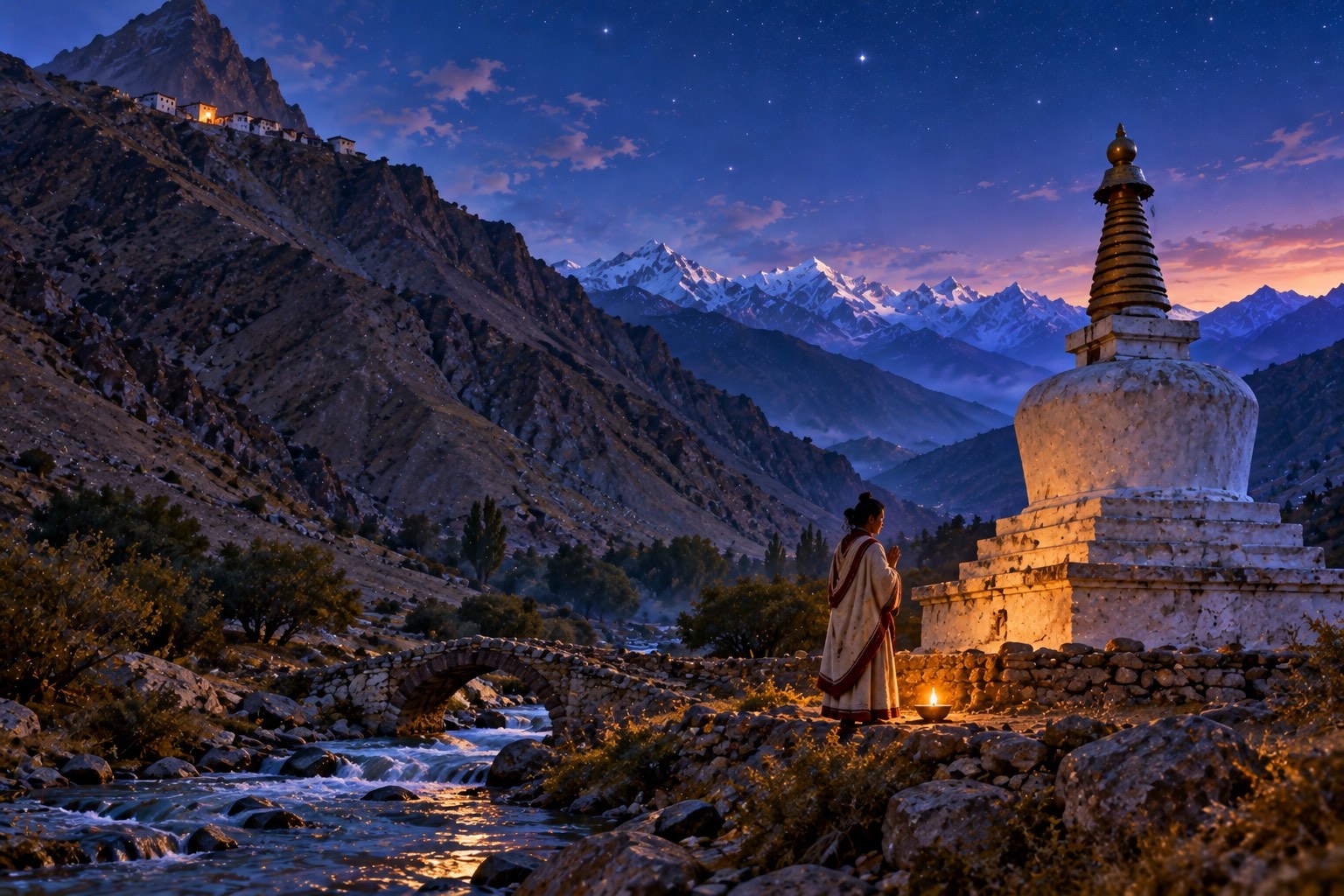
Mawochok and the great stupa in the valley below are modelled on Hugh Richardson's photographs of 1950: a bare, dry mountainside, buildings on a narrow shelf beneath a rocky peak, and a white stupa with a stepped base and a round drum. In the early scenes the hermitage is only a couple of huts. The Khoting temple follows Richardson's description of its huge, crowned Vairochana with one hand raised in the gesture of fearlessness. No source describes the cave at Sinmo Barje, so it is drawn plainly, with an empty stone seat and a few simple objects.
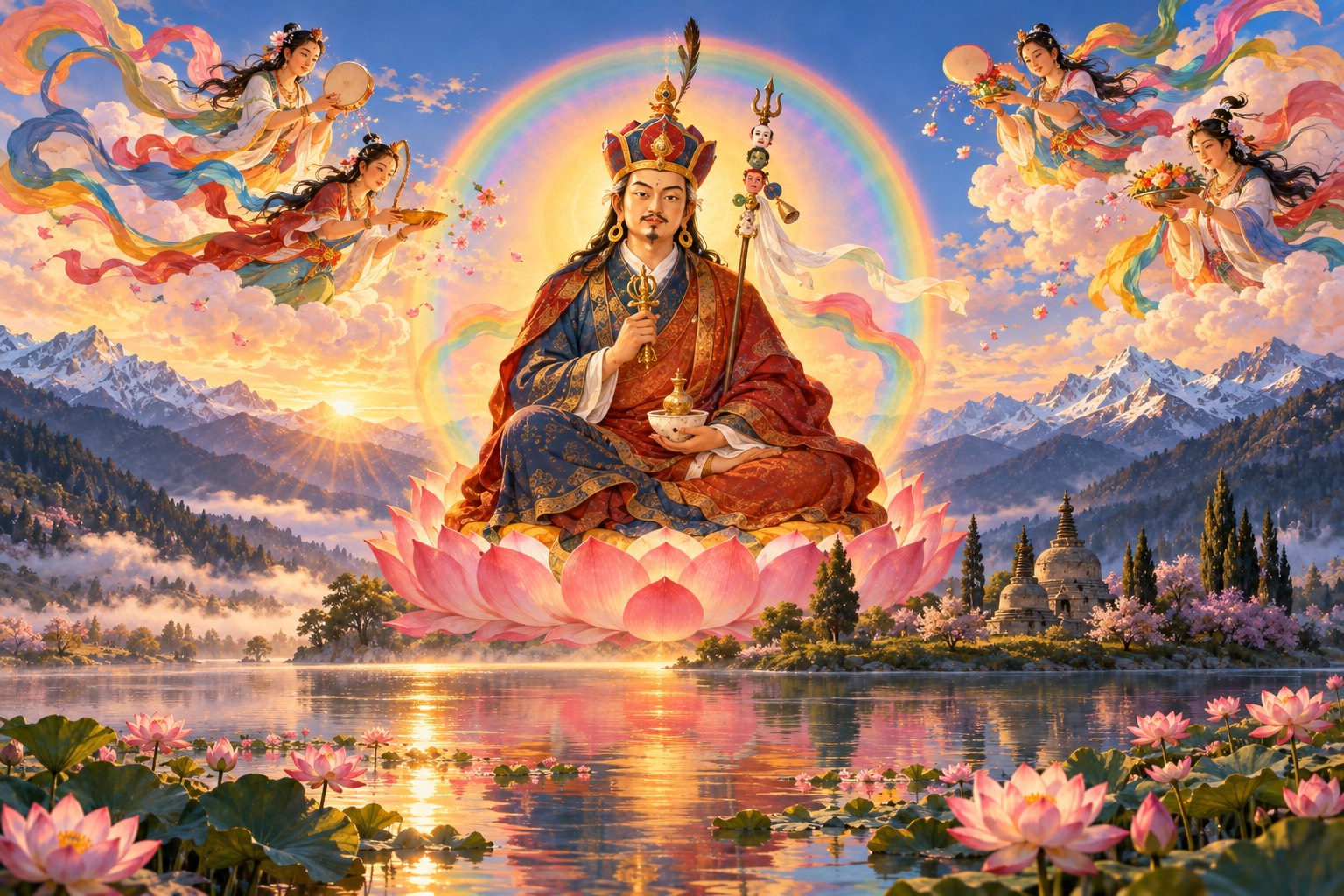
Treasures are drawn as small closed scrolls of yellow paper and a plain stone casket, never as gold or jewels, and no writing appears on them, because this site never places script inside illustrations. Guru Rinpoche appears twice: once small, in a child's dream, and once in his best-known form above the lake of his birth, as devotional paintings of Tsokye Dorje, "Lake-Born Vajra," show him. That image is timeless, not the birth scene itself; in the birth story he is a child with no hat. Here he wears the lotus hat with a single vulture feather and holds the five-pronged vajra at his heart and the skull cup with a long-life vase, with the slender khatvanga staff at his shoulder. The figure at the stupa in the last image stands for the revealers who came after Nyangral, such as Guru Chöwang; it is not a portrait.
Why this matters for practice
The Seven-Line Prayer opens by remembering a place, the northwest of Oddiyana, and a birth on a lotus. Much of what Tibetans picture when they say those words was handed down through Nyangral's Copper Island. Knowing that the story came to us through a poor hermit's long devotion can make each recitation feel less like a formula and more like joining a very old conversation.

If something in this story stayed with you, you might remember the lake and the lotus that Nyangral's book describes, and recite the prayer once. Its first line still names the place his story begins: the northwest of Oddiyana.
Sources and further reading
- Nyangrel Nyima Ozer, by Daniel Hirshberg (2013), Treasury of Lives (Internet Archive snapshot, 2015)
- Teacher: Nyangral Nyima Ozer (set), with items 66246, 61235 and 80348, Himalayan Art Resources
- Nyangral Nyima Özer Series (author page), Lotsawa House
- A Prayer Recalling the Life and Liberation of the Precious Master Padmasambhava (Samye Translations, 2017), Lotsawa House
- Nyang Ral Nyima Özer, Rigpa Wiki (Internet Archive snapshot)
- Zanglingma, Rigpa Wiki (Internet Archive snapshot)
- Mawochok, Treasury of Lives (Internet Archive snapshot, 2025)
- Mawachok monastery, the valley, and the stupa below (photographs by Hugh Richardson, 1950), The Tibet Album, Pitt Rivers Museum
- Khoting temple and its Vairocana image (photographs by Hugh Richardson, 1950), The Tibet Album, Pitt Rivers Museum
- Review of Remembering the Lotus-Born, Reading Religion (Internet Archive snapshot, 2024)
- Remembering the Lotus-Born: Padmasambhava in the History of Tibet's Golden Age, by Daniel A. Hirshberg (Wisdom, 2016), Book (publisher page, Internet Archive snapshot, 2023)
This retelling is waiting to be read by a knowledgeable practitioner. Where the traditional accounts differ, the story says so; if you notice a mistake, please tell us through Share Your Story.